EPISODE SIX:
JANE DOE


Colleen's big sister Margaret
In this gripping sixth episode of Catching Evil, Margaret Carol shares the devastating account of her sister Colleen Osborne's abduction and murder by serial killer Christopher Wilder. Margaret's words are a poignant reminder of the long-lasting pain inflicted on families by such tragedies.
"You learn to live with grief. You never get over grief. It's always there," Margaret says, her voice a testament to the enduring anguish of losing a loved one. "This experience, it changes how you look at the world."
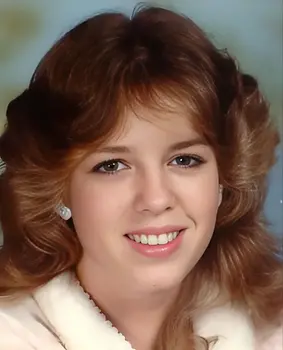
Colleen was a beautiful young woman with her life ahead of her. A lively and athletic 15-year-old, she was the baby sister of six older siblings. Margaret remembers her as "cute, small, petite, with brown hair that was almost blonde, and a tan that came easily." Colleen was a baseball player with more athletic skills than her sisters. But on that fateful spring break day in 1984, she was taken from her family forever.
"She was just gone. And you couldn't make sense of it," Margaret recalls, her emotions still raw. "Nobody has the right. There shouldn't be those people. There shouldn't." The anger and frustration are palpable as Margaret recounts the initial response from police, who treated Colleen's disappearance as a runaway case. The delay in the investigation was crucial, allowing Wilder to continue his killing spree.
Margaret criticises the Miami police for their mishandling of Wilder's surveillance and how a private detective's efforts to track Wilder were stymied by law enforcement inaction. The episode scrutinises the systemic failures that allowed Wilder to continue his crimes, and the personal cost to families like the Osbornes.
Colleen's remains were found three weeks later by a fisherman, but she remained a Jane Doe for 27 years until modern forensic techniques identified her. Margaret emphasises the importance of properly identifying victims, providing closure for families, and ensuring that no one remains nameless.
"It makes you angry," she says, her voice trembling with emotion. "But it also makes you want to make a difference. To make sure that no other family has to go through what we went through."
This episode is a powerful tribute to Colleen's memory and a call to action for systemic change. Join us as we honour Colleen's life and push for the reforms that could save other families from similar heartbreak.
Go to our Join the Chase page for details of how you can get involved and help us make a difference.

Colleen Orsborn

Colleen, at the front, with her siblings. Margaret is on the left

Colleen with her granddad
6 TAKEAWAYS FROM EPISODE 6
A Mother's Endless Search
While the FBI and local police pursued their investigation, Colleen's mother began her own desperate quest, never stopping the search for her daughter, clinging to hope that somewhere, somehow, Colleen might still be alive.
It was a mother's love that refused to accept defeat—a love that would ultimately help bring her daughter home.
The Long Road to Identification
For more than two decades, Colleen lay in a morgue, labeled only as "Jane Doe." Her remains had been discovered, but without the technology to make a positive identification, she remained nameless—another faceless victim in Wilder's wake.
Then, 26 years after her disappearance, advances in DNA technology and a careful review of medical records finally provided the answer her family had waited for. Jane Doe had a name: Colleen Orsborn.
A Bittersweet Homecoming
The identification brought both closure and heartbreak. After decades of uncertainty, Colleen's family could finally lay her to rest properly. They could say goodbye, hold a funeral, and know where their daughter was.
But the victory was overshadowed by a cruel irony: Colleen's mother, who had spent so many years praying for her daughter's return, had died before the identification was made. The woman who never gave up hope, who kept Colleen's memory alive through decades of uncertainty, would never get to attend her daughter's funeral.
The Victims Who Remain Lost
Colleen's story highlights both the possibility of closure and the ongoing tragedy of Wilder's crimes. While her family finally found peace, the families of Rosario Gonzales and Beth Kenyon—Wilder's earlier victims—continue to wait. Their daughters' bodies have never been found.
The FBI may have quickly identified Wilder as a suspect, but his ability to hide his victims' remains has left some families in permanent limbo, still searching for answers that may never come.
The Daytona Connection: Christopher Wilder's Hidden Secrets
Even decades after his death, Christopher Wilder continues to guard his darkest secrets. Nowhere is this more evident than in Daytona Beach, Florida—a location that may hold the key to understanding the true scope of his reign of terror.
A Killer at the Racetrack
In early February 1984, just six weeks before he would abduct Colleen Orsborn from a Daytona Beach street, Wilder was living a double life in plain sight. By day, he was a respected businessman and racing driver, competing in the prestigious SunBank 24-hour endurance race at Daytona International Speedway in his black Porsche 911.
But even then, the predator was hunting.
Staying at the Golden Eagle Motor Inn with his racing team, Wilder quickly zeroed in on his next target—a pretty waitress at a nearby steakhouse where the team dined. His approach was textbook Wilder: charming, successful, and seemingly legitimate. He gave her a VIP pit lane pass, an invitation that would have seemed like a dream come true to most young women.

FACES OF EVIL


Chilling images of Christopher Wilder reveal a haunting enigma. His eyes, flat and devoid of emotion, mask the psychopath lurking beneath.
On the left is a 'facial age regression' image, capturing Wilder aged nineteen in Sydney, Australia, while living with his family. It bears a striking similarity to the description of the 'surfie' youth that Wolfgang Schmidt saw with his sister Marianne on Wanda Beach in January 1965 on the day she was murdered along with her friend Christine Sharrock. sister The middle photo shows him at his Florida construction company about fifteen years later. On the right, his February 1983 mug shot following his arrest for probation violation following a trip back to Australia.
'The tiny twenty-year-old, with long dark hair, watched him practise the following day and later that night went back to his room.
Next morning, however, he’d freaked her out by going down on one knee and proposing marriage, telling her he had everything in life except a beautiful woman to look after him and begging her to go back to Boynton Beach with him and be his princess.
The waitress had been so creeped out by his behaviour she’d immediately fled, never returning any of his calls, and even leaving her job at the restaurant.'

Book extract The Pretty Girl Killer courtesy of Penguin Random House

Actual FBI case notes on the chronology of Wilder's crimes as he began his killing spree across America. Number four on the list is Colleen Orsborn
Christopher Wilder ran his own Porsche car racing team
Colleen, at the front, with her siblings. Margaret is on the left
Colleen with her grandfather
Actual FBI case notes on chronology of Wilders crimes on the run in the lead up to, and including, Colleen's disappearance.
Colleen with her granddad
The FBI Knew: How Agents Suspected Wilder was Linked to Colleen's Disappearance
This FBI report reveals a chilling truth: federal agents suspected Christopher Wilder was behind Colleen Orsborn's disappearance within weeks of her vanishing from Daytona Beach on March 15th, 1984.
The unclassified document shows how investigators connected the dots. Wilder's pattern was becoming clear—young, attractive women disappearing from beach communities where he had recently been present. Colleen, who was simply walking to the beach that day, fit his victim profile perfectly.
But knowing who was responsible and proving it would take decades.
A Mother's Endless Search
While the FBI and local police pursued their investigation, Colleen's mother began her own desperate quest, never stopping the search for her daughter, clinging to hope that somewhere, somehow, Colleen might still be alive.
It was a mother's love that refused to accept defeat—a love that would ultimately help bring her daughter home.
The Long Road to Identification
For more than two decades, Colleen lay in a morgue, labeled only as "Jane Doe." Her remains had been discovered, but without the technology to make a positive identification, she remained nameless—another faceless victim in Wilder's wake.
Then, 26 years after her disappearance, advances in DNA technology and a careful review of medical records finally provided the answer her family had waited for. Jane Doe had a name: Colleen Orsborn.
A Bittersweet Homecoming
The identification brought both closure and heartbreak. After decades of uncertainty, Colleen's family could finally lay her to rest properly. They could say goodbye, hold a funeral, and know where their daughter was.
But the victory was overshadowed by a cruel irony: Colleen's mother, who had spent so many years praying for her daughter's return, had died before the identification was made. The woman who never gave up hope, who kept Colleen's memory alive through decades of uncertainty, would never get to attend her daughter's funeral.
The Victims Who Remain Lost
Colleen's story highlights both the possibility of closure and the ongoing tragedy of Wilder's crimes. While her family finally found peace, the families of Rosario Gonzales and Beth Kenyon—Wilder's earlier victims—continue to wait. Their daughters' bodies have never been found.
The FBI may have quickly identified Wilder as a suspect, but his ability to hide his victims' remains has left some families in permanent limbo, still searching for answers that may never come.
The Daytona Connection: Christopher Wilder's Hidden Secrets
Even decades after his death, Christopher Wilder continues to guard his darkest secrets. Nowhere is this more evident than in Daytona Beach, Florida—a location that may hold the key to understanding the true scope of his reign of terror.
A Killer at the Racetrack
In early February 1984, just six weeks before he would abduct Colleen Orsborn from a Daytona Beach street, Wilder was living a double life in plain sight. By day, he was a respected businessman and racing driver, competing in the prestigious SunBank 24-hour endurance race at Daytona International Speedway in his black Porsche 911.
But even then, the predator was hunting.
Staying at the Golden Eagle Motor Inn with his racing team, Wilder quickly zeroed in on his next target—a pretty waitress at a nearby steakhouse where the team dined. His approach was textbook Wilder: charming, successful, and seemingly legitimate. He gave her a VIP pit lane pass, an invitation that would have seemed like a dream come true to most young women.
The tiny twenty-year-old, with long dark hair, watched him practise the following day and later that night went back to his room.
Next morning, however, he’d freaked her out by going down on one knee and proposing marriage, telling her he had everything in life except a beautiful woman to look after him and begging her to go back to Boynton Beach with him and be his princess.
The waitress had been so creeped out by his behaviour she’d immediately fled, never returning any of his calls, and even leaving her job at the restaurant.
Book extract The Pretty Girl Killer courtesy of Penguin Random House

Left, Wilder driving his black Porsche during the endurance race at Daytona. He blew the engine and didn't make it to the finish line, placing 52nd overall.
Right, Wilder is photographed at the Daytona Speedway track between practice sessions. Is the girl with her back to the camera the waitress he proposed to after their one-night stand?


Can you help us identify this woman? Did Wilder just take photographs of her, or is she another of his victims that he abducted and murdered?
If this is you, or you know her identity, please share anything you can with us. Email us at info@catchingevil.com
Above is a Florida police activity bulletin for February 1984.
The Photographs That Tell a Story
After Wilder checked out of the Golden Eagle Motor Inn, a subsequent guest made a horrifying discovery: seventeen photographs scattered in their room. Among them were twelve images of a beautiful young woman posing in a bikini and various outfits—the kind of portfolio shots Wilder used as bait to lure his victims.
Two photos showed a small group, including a teenage girl, posed in what appears to be a public building parking lot. Innocent enough, perhaps—until you see the other images.
The remaining photographs are too disturbing to fully describe. They show a female victim in a bathtub, clearly deceased, bearing evidence of the brutal torture that became Wilder's signature: cigarette burns, razor cuts, and other unspeakable violations. A male hand—presumably Wilder's—appears to be forcing open the victim's eyelid.
A Pattern of Violence
These images align perfectly with what we know about Wilder's methods. He didn't simply kill—he tortured. Beating, electrocution with homemade devices, supergluing victims' eyes shut, and systematic cutting were all part of his repertoire. The Daytona photographs suggest he documented his crimes, creating a horrific trophy collection.
But here's what haunts investigators: the smiling woman in the bikini photos has never been identified. Was she the waitress from the steakhouse? Did she accept that VIP pass, only to become another of Wilder's forgotten victims?
The Questions That Remain
The timeline is deeply troubling. Wilder raced at Daytona in early February 1984. The photographs were found in his former room shortly after. By March, he had begun the cross-country killing spree that would make him one of America's most wanted men.
How many victims lie between those Daytona photographs and his later confirmed murders? How long had he been documenting his crimes? And most importantly—who was the woman who smiled for his camera, not knowing she was posing for her own death?
Help Us Find Answers
If you recognize the woman in these photographs, or if you have any information about Christopher Wilder's time in Daytona Beach in February 1984, please reach out. After forty years, it's time these victims had names—and their families had answers.
Contact us at: info@catchingevil.com
The investigation continues. The truth is still out there.
She Was Our Little Angel": A Sister's 27-Year Wait for Answers
Margaret Orsborn speaks with quiet strength about the sister she lost 40 years ago, but the pain in her voice is unmistakable. Colleen was just 15 when serial killer Christopher Wilder snatched her from a Daytona Beach street in March 1984—a baby sister who never came home.
"This experience changes how you look at the world," Margaret tells the Catching Evil podcast hosts. "You don't trust it. You don't trust people. You never know that last moment."
A Bright Light Extinguished
Colleen was the baby of six siblings, born during a snowstorm into a family already splitting apart. Small and petite with brown hair that caught blonde highlights, she was athletic, exceptionally bright, and radiated joy. Her smile was "gorgeous," lighting up any room, and as the youngest, she loved making everyone laugh.
But beneath the surface, troubles were brewing. Their mother was battling frequent pneumonia, had just started a new job, and was caring for elderly parents. Colleen was struggling at a rough Daytona school during the chaos of spring break season. On that fateful March morning, Margaret's mother simply told Colleen to "get up and go to school" before leaving for work. Instead, the 15-year-old—hormonal, boy-crazy, and drawn to the beach festivities—made a different choice. Her plan was innocent enough: skip school, maybe grab a swimsuit, catch a concert near their home, then return pretending she'd been in class all along.
It was typical teenage rebellion that would destroy a family and create decades of unimaginable grief.
From Anger to Terror
As hours stretched into days, the Orsborn family's anger slowly transformed into terror. What began as frustration with a rebellious teenager became every parent's worst nightmare. They called friends, drove around town, pieced together timelines. In 1984, there was no playbook for missing children—no internet, no national centers, no established procedures.
"Initially, we were angry," Margaret admits. "My mom had been ill, and it seemed selfish." Police marked it as a potential runaway, despite family protests. "Even her young friends said she would never do that to our mother."
The cruel irony becomes painfully clear as Margaret discovers the devastating timeline. On the exact day Wilder was stalking Colleen, FBI agents in Miami were meeting to discuss dragging him in for questioning while a private detective was breaking into his house. The predator was hunting his next victim just around the corner from the Orsborn home. "He should have been stopped," says Margaret bluntly.
27 Years of Limbo
The most heartbreaking failure came when Colleen's remains were discovered just three weeks later. Pathologists wrongly concluded the body was Hispanic with different eye and hair colour, ruling out any connection. For 27 agonising years, she remained a Jane Doe while her family lived in limbo.
Margaret's mother never gave up hope, signing Christmas and birthday cards "from her and Colleen" until her death in 1989. Having already lost four infant children, she couldn't accept losing another daughter without answers.
Science Brings Closure
The breakthrough finally came through Dr. G, a new medical examiner determined to solve cold cases using proper forensic methods. The key was forensic odontology—matching Colleen's radiant smile from her school photo to dental remains. The beautiful smile Margaret remembered so fondly became the key to identification.
When DNA finally confirmed the truth in 2011, the family held two services—one public, one intimate, where siblings gathered to say the words they'd carried for decades: "I'm sorry."
"We could put her to rest, say goodbye," Margaret says simply. "Now she's with my mom."
Forever Family
Now Margaret wears a necklace representing the four sisters—three gold figures and a tiny angel. "That makes it complete," she says, voice full of love. The baby sister who loved being centre of attention, who drew pictures and dreamed of horses, who was brilliant enough to work in the school office when regular classes bored her.
"She could have done just about anything," Margaret reflects. Forever fifteen, forever remembered, forever their little angel.
Q: Were the families of Wilder's victims, including Colleen's, let down by systemic attitudinal problems amongst police back in the 1980s?
A: Yes, in many cases that is true. With Colleen, an officer insisted on
waiting the standard forty-eight hours before filing a missing person’s report, which, because it was the weekend, meant it was four days before Colleen’s details joined the missing person files.
The paperwork was dutifully done, but in many cases, Wilder got away with his crimes because too many did too little, too late. It had been too easy to suspect Beth Kenyon had skipped town with a boyfriend,
Rosario Gonzalez had got cold feet about her upcoming wedding, and Colleen Orsborn had run away from a tough situation at home.