Episode 3: The Collector

'I SAW PURE EVIL': Teenage Beauty Queen Reveals How A Pink Sports Car Saved Her From A Serial Killer

Eighteen-year-old Jacqueline was the reigning Miss North Miami when she was sent to a stranger’s house for a “photo shoot.” That stranger was serial killer Christopher Wilder.
Only weeks before he went on one of America’s worst murder rampages, she was alone with him in his Florida home studio when he pushed her to start posing for more racy photographs.
She refused and the shoot ended quickly, but not before Wilder delivered a final warning that still haunts her — the kind of comment that only makes full sense when you later realise who he really was.
"Be careful, there's a lot of crazy people out there."
Why did Jacqueline reject Wilder and live to tell the story? Her life was likely saved that day at least, because of her car - a bright pink Porsche convertible. It was so distinctive that Wilder couldn't take the chance neighbours would remember it parked on his driveway and the stunning young woman who driving it. Or did the ruthless serial killer hesitate because of the car, he also owned a couple of Porsches, including his racing car which Jacqueline sa when he took her out through his garage.
'It's mind-blowing to think how close I came, you know? Just insane. Evil, pure evil. That's the scariest part. It's like looking at humanity so raw and so close and knowing how close you came to the burn and yet somehow you survived.'
This episode begins to reveal what was waiting behind Wilder’s charm. Homicide Detective Tom Neighbors describes finding a secret torture chamber in Wilder's house — with chains, gags and restraints, and blood discovered inside. Women were lured in through modelling promises and photography; some paid for their time, the not-so-lucky ones controlled and humiliated. It showcases Wilder’s obsession with the novel The Collector — not just his inspiration, but the blueprint for his modus operandi — down to stalking, captivity fantasies, and using photos to blackmail and silence victims.
We also expose the bigger pattern: the Wanda Beach murders in Australia, and a trail of missed chances where police and courts let him slip through. Things get even more chilling when we learn about Wilder's marriage — and a young wife trapped in sexual violence, he tries to kill on three separate occasions. The message lands hard: Wilder didn’t “snap.” He practised — and women were the ones left to carry the cost.
________________________________________________________________________
How A Serial Killer's Favourite Book Became His Murder Blueprint

Time Magazine branded him one of fiction's most cunning villains. But for Christopher Wilder, "The Collector" wasn't fiction—it was a manual.
The Australian-American serial killer didn't just read John Fowles' 1963 psychological thriller. He memorised it. Scribbled notes in the margins. Owned multiple copies. The FBI found three or four when they finally caught up with him.
The novel's plot? A psychopath stalks a pretty young student, abducts her, and holds her captive in a secret room. Sound familiar? Just 18 months after publication, 19-year-old Wilder allegedly lured Marianne Schmidt and Christine Sharrock into remote dunes at Sydney's Wanda Beach—and butchered them with a knife.
It became Australia's largest murder hunt. Detectives had witness descriptions matching Wilder. They had DNA. They blew it. Lost the evidence. Missed the killer.
The new podcast "Catching Evil" has uncovered fresh evidence linking Wilder to Wanda Beach, including a new witness. But it's Wilder's obsession with "The Collector" that reveals the chilling blueprint behind decades of murders.
Like the book's antagonist, Frederick Clegg, Wilder targeted beautiful, naive young girls. He stalked them first. Used photography as his weapon—posing as a talent scout, promising modelling careers, taking intimate photos, then blackmailing victims.
He even built a secret room in his Boynton Beach, Florida home—just like Clegg. Brought victims there. Proposed to one. She refused. She's still missing.
"The Collector" became other serial killers' inspiration too. But Wilder took it further, believing the book spoke directly to him.
"It's me he wants, not my emotions or my mind or my soul," reads one haunting passage. "I'm meant to be dead, pinned, always the same, always beautiful."

The podcast reveals another stomach-churning detail: Three years after Wanda Beach, Wilder married a 22-year-old schoolteacher named Christine—same name as victim Christine Sharrock. He'd stalked his bride for six hours on another Sydney beach.
Where did newlywed Wilder choose to live? Meters from St. Michael's Church—where Christine Sharrock's memorial service was held before hundreds of mourners who couldn't fit inside.
"Serial killers like collecting trophies," explains podcast host Andy Byrne. "I'd hazard Wilder would walk up the street, go in this church. This would be a trophy for him."
On the day of Christine's memorial, Wilder likely stood among the crowds, the only one knowing what he'd done, excited by the carnage.
His wife Christine's testimony later revealed three "accidents": brake fluid disappeared, her steering wheel pin broke, gas knobs were left on with doors closed. Wilder maintained her car. She narrowly escaped death multiple times before fleeing the marriage.
Courts and police on two continents let Wilder slip through cracks for years. He refined his technique, using his favourite book as a playbook—stalking beaches with cameras, targeting pairs of young women, getting thrills from parking cars containing victims in public places.
By the time authorities connected the dots, Wilder had left a trail of bodies across America and Australia. Two years after the book, the movie based on it was released and Wilder’s infatuation extended to the actress Samantha Eggar, who played Clegg’s victim Miranda and won an Academy Award nomination for her role. Many of Wilder’s victims would bear more than a passing resemblance to this strikingly beautiful brunette.
He’s a collector. That’s the great dead thing in him.
— John Fowles, The Collector
Jacqueline, the brave beauty queen who survived Wilder's Florida house shares her testimony in the episode—proof that some butterflies escape the collector's glass.
5 TAKEAWAYS FROM EPISODE 3
Obsession with The Collector: Christopher Wilder was deeply influenced by John Fowles' novel, which became a blueprint for his crimes. The book's themes of control and captivity resonated with Wilder, driving him to target young women in ways that mirrored the story's antagonist. His fixation on the novel highlights the dangerous impact of dark fantasies on his behaviour.
Eerie Coincidences: Wilder's life was filled with unsettling parallels to his crimes. He married a woman named Christine, the same name as one of the Wanda Beach victims. Their apartment overlooked the church where her memorial service was held, suggesting a chilling connection to his past actions. These coincidences reveal a pattern of behaviour that seemed to blur the lines between his personal and criminal lives.
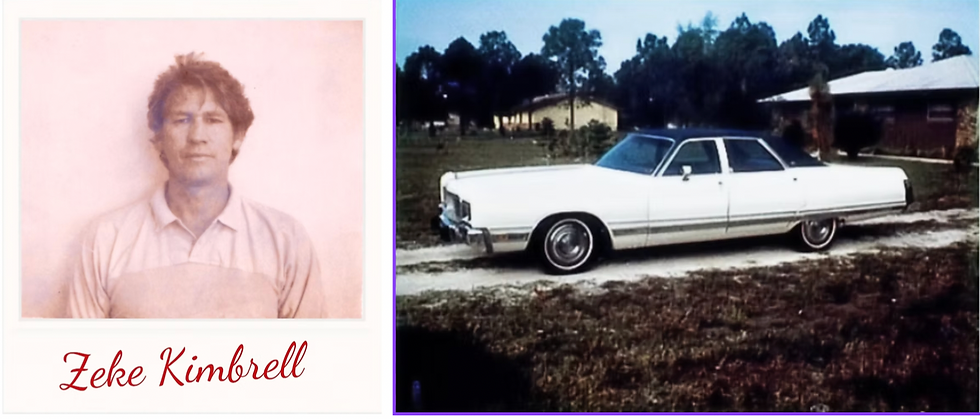
Insight from Zeke: The interview with Wilder's business partner, Zeke, sheds light on Wilder's extraordinary ability to lie and conceal his true nature. Zeke's insights reveal how Wilder manipulated those around him, maintaining a facade of normalcy while hiding his dark desires. This capacity for deception played a crucial role in his ability to evade capture for so long.
Systemic Failures: Despite multiple confessions and overwhelming evidence of his guilt, Wilder continually escaped justice. The episode highlights the systemic flaws that allowed him to avoid conviction, emphasising the need for a more robust legal framework to prevent such failures in the future. His case serves as a stark reminder of the importance of believing and protecting victims.
Survivors’ Courage: The bravery of Wilder's victims and their families is a central theme of the episode. Despite the trauma they endured, they have continued to speak out, seeking justice and ensuring that their stories are heard. Their resilience serves as an inspiration and a powerful reminder of the human spirit's ability to overcome adversity.
"The FBI put my wife and I through the wringer. It was crazy. Hellfire man they drove me all over hell’s half acre. I was questioned so many times it was ridiculous."
- Zeke Kimbrell, Wilder's business partner

The Wilder family was a family full of dark secrets. Christopher Wilder told his court-appointed sex therapist and his business partner that he despised his parents and Australia. He said his drunken father beat him, and his mother did little to protect him. Was it all a lie to gain sympathy? His brother Stephen would fly to America during Wilder's final killing rampage and offer to make a televised appeal for him to give himself up. But the FBI declined after the Agent who interviewed Stephen said in his report that there was 'a good deal of jealousy and animosity between the two brothers'. The view was taken that the televised appeal might antagonise Wilder even further and lead to even more victims.
Catching Evil is committed to making a meaningful impact in the lives of those affected by violent crime, particularly in light of the chilling legacy of serial killer Christopher Wilder, who left behind an unknown number of victims. In our pledge to honour these individuals and support their families, we donate to homicide and victims of violence nonprofits in both America and Australia.

Survivors of Homicide Inc, based in Connecticut, provides assistance to anyone who has lost a loved one to violent crime.
All services are offered to members free of charge, including one-on-one counselling, support groups, court support throughout the judicial process and personal advocacy in working with law enforcement and other community agencies.
It was founded in 1983, just before Christopher Wilder went on his rampage, by a group of families trying to cope with the murder of a loved one that shattered their lives.

When you donate to Yesterday Today Tomorrow Women, you are investing in the empowerment of women across generations. This Florida based nonprofit was founded by Kris Conyers, who was abducted off the street at gunpoint by Christopher Wilder when she was 11 years old.
YTT Women is dedicated to advancing women’s mental health and social wellbeing and contributions directly support community-based initiatives that raise awareness, provide resources, and foster safe, supportive spaces for women to grow and heal.

Mary’s House Services was founded in 2015 by a dedicated group of concerned citizens from Sydney’s northern suburbs, close to where Christopher Wilder was born and lived wth his family. Members of the local clergy, health authorities, philanthropists and community and business leaders came together to help provide safety for women and their children, victim-survivors of violence and abuse.
The Mary’s House refuge was established to address the significant gap in government funded services and to save lives in the region by providing critical support and a safe space to cope with their trauma and begin to rebuild their lives.
How to donate: https://mhs-summer-appeal-2025.raiselysite.com/#donate
Catching Evil, proudly a part of the Acast Creator Network, is an Original Voices presentation for Sticky Toffee Media


Comments