Episode 12: A SERIAL KILLER'S LITTLE BLACK BOOK


The Little Black Book That Could Unlock Australia's Darkest Secret
How Catching Evil is doing what decades of policing failed to do

She was fifteen years old, shy, and shopping for work clothes with her girlfriend in a Sydney department store two weeks before Christmas, 1964. A good-looking blond boy kept finding her among the clothing racks, following her, asking the same question over and over. *Come to Wanda Beach with me.* Jan said no. She was too shy. Her parents wouldn't approve. She moved away. He followed. She moved again. He followed again.
Two weeks later, two girls her age — Marianne Schmidt and Christine Sharrock — were found buried in a shallow grave at Wanda Beach. They were fifteen years old. They lived in the same suburb. They shopped at the same store.
Jan has spent sixty years wondering if the boy who asked her to Wanda Beach was the same person who butchered those girls.
She almost certainly knows the answer. And so do we.
The Wanda Beach murders of January 11, 1965 remain the greatest unsolved double murder in the history of New South Wales. Two teenage girls, enjoying a summer's day with Marianne's younger siblings nearby, were lured into the sand dunes and savagely killed. The sound of the children's radio drowned out their dying screams. For six decades, their families have waited for justice. For six decades, they have been failed.
The prime suspect has long been Christopher Wilder — a charming, handsome Australian who would go on to become one of America's most prolific and terrifying serial killers, hunting and murdering women across the United States before dying in a confrontation with police in 1984. Investigators have suspected him of Wanda Beach for decades. Detective Inspector Ian Waterson, who led an elite cold case team tasked specifically with solving the murders, called Wilder his number one suspect — 'a red hot suspect'. By the end of that reinvestigation, every other suspect had been eliminated. Only Wilder remained.
And yet. Nothing.
This is where Catching Evil has stepped in and is doing something quietly extraordinary. Not with Hollywood dramatics or sensationalism, but with something more powerful: by simply listening.
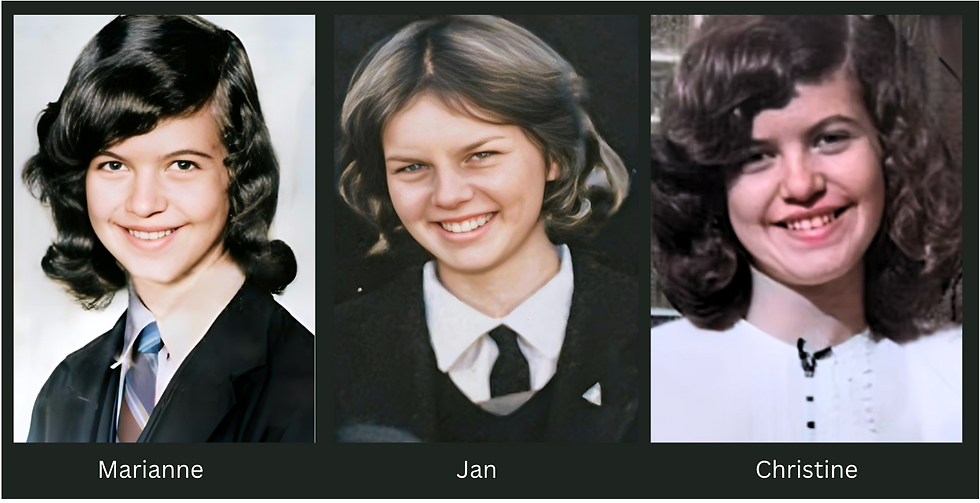
Jan had tried to be heard before. Days after the murders, her mother took her to the police. Two detectives came to the house. They took her statement. They took the little black book — a book crammed with fifty to one hundred girls' names and phone numbers, left behind by Wilder when he vanished from his job at the department store the moment the murders hit the news. He never went back. Never gave notice. Just disappeared. And he left his book behind.
The police took it. Jan and her mother never heard from them again.
In 2019 Jan wrote to the NSW Cold Case Unit. She laid it all out — the weekly pestering, the obsession with Wanda Beach, the little black book, the statement that should still be in police archives. She asked them to look. She asked them to care. She asked, as she had asked for sixty years, for someone to follow through.
Silence. Tumbleweeds. Nothing.
And then she found Catching Evil.
What the podcast has uncovered in this single episode is breathtaking. Jan's testimony doesn't just place Wilder in the same suburb as the victims — it places him actively, repeatedly, obsessively trying to lure fifteen-year-old girls to the exact beach where two fifteen-year-old girls were murdered. Her school photo, pulled from a fading family album, shows a young woman strikingly similar in appearance to victim Marianne Schmidt. Wilder had a type. Jan was it. So was Marianne.

Then there is Richard Wales, now retired on Queensland's Sunshine Coast, who as a young teacher saw a man matching Wilder's description moving through train carriages toward Cronulla in the days after the murders — searching, hunting, scanning faces. Scared enough to call home to his mother first. Then scared enough to call the police. He was never called back.
And there is the little black book itself — that dynamite piece of physical evidence linking Wilder to a pattern of predatory behaviour that would define the next two decades of his life. When the FBI eventually searched his American home, they found something almost identical: lists of women, their measurements, whether they were married or single. A hunter's catalogue. The NSW police had that same evidence in their hands in January 1965. Where is it now? Nobody knows. Lost, perhaps. Like the glass slide containing the killer's semen recovered from the crime scene — the most important piece of forensic evidence in the history of the NSW police — which has simply gone missing from the forensic laboratory.
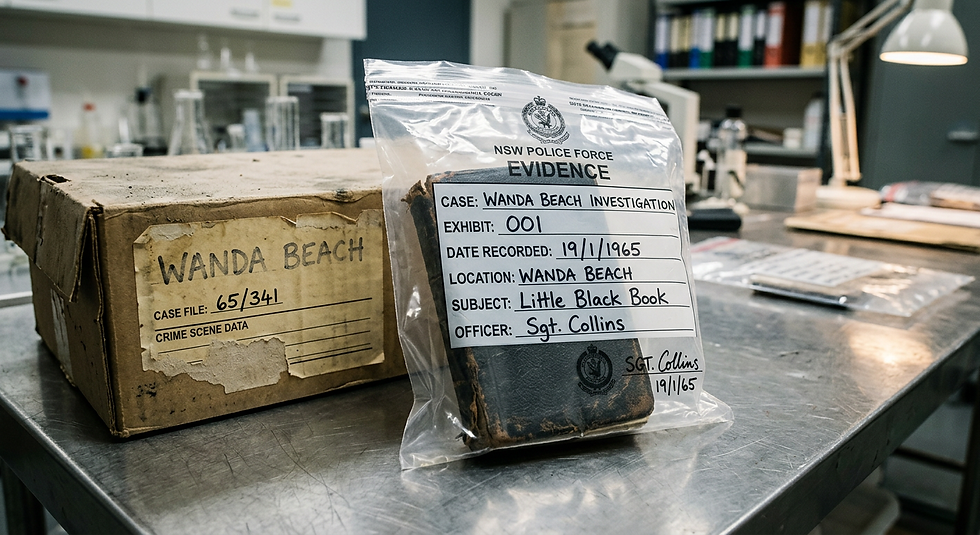
Gone missing. A smoking gun. Gone.
Marianne's brother Hans has spent a lifetime being told by police that they will look into things. Not that they have. Just that they will. Christine's family has waited just as long.
What Catching Evil represents — what it is proving, episode by episode, continent by continent — is that the power of storytelling and the reach of podcasting can do what bureaucracy and institutional indifference cannot. Listeners in 130 countries have turned this into a live investigation. Witnesses who spent decades feeling ignored have finally found someone who will sit across from them, look them in the eye, and say: 'We believe you. You matter. What you know matters.'
Jan deserved to be heard in 1965. She deserved to be heard in 2019. She is being heard now.
For Marianne. For Christine. For every Jane Doe still waiting to be named. The little black book must be found. The DNA slide must be searched for. And the families of Wanda Beach deserve, finally, the justice that has eluded them for sixty years.
The podcast is doing what the police would not. And the world is listening.
_________________________________
Thirteen Reasons Why: The Case Against Christopher Wilder for the Wanda Beach Murders
The evidence that has always been there — and why it can no longer be ignored

For sixty years, the murders of fifteen-year-old friends Marianne Schmidt and Christine Sharrock at Wanda Beach, Sydney, have remained unsolved. They are the greatest unsolved double murders in the history of New South Wales. But as the true crime podcast *Catching Evil* has methodically revealed, the case against one man — American serial killer Christopher Bernard Wilder — has never been stronger. Here, laid out with unflinching clarity, are the thirteen coincidences that tie Wilder to the crime. As podcast co-host Andy Byrne bluntly states: 'I don't believe in coincidences.' After reading this, you may well agree.
---
1. He Lived in the Same Suburb as the Victims
Christopher Wilder was not a stranger passing through. He lived in North Ryde — the same tight-knit Sydney suburb as Marianne Schmidt, Christine Sharrock, and Jan, the woman he repeatedly tried to lure to Wanda Beach in the weeks before the murders. This was not a random targeting of strangers in an unfamiliar place. This was a predator hunting in his own backyard, among girls he may well have already known by sight.
---
2. He Worked Where the Victims Shopped
Wilder worked as a casual employee in the women's fashion department at Grace Brothers, Top Ryde — the local department store where the Wanda Beach girls and their neighbours shopped. It placed him in direct, repeated contact with young women from his own community. It gave him access. It gave him opportunity. And it gave him the perfect hunting ground.
---
3. His MO for Twenty Years Was Targeting Two Girls Together on Beaches
For two decades — from Australia to America — Christopher Wilder's pattern of predatory behaviour was disturbingly consistent. He targeted young women, frequently in pairs, frequently near beaches. The Wanda Beach murders involved exactly two girls, lured to an isolated stretch of coastline. This was not a one-off. This was the beginning of a methodology that would be repeated again and again across two continents and two decades.
---
4. In the Weeks Before the Murders, He Obsessively Tried to Lure a Fifteen-Year-Old Girl to Wanda Beach
This is perhaps the most chilling coincidence of all. For several consecutive Saturdays in December 1964 — just weeks before the January 11 murders — Wilder stalked Jan through the racks of Grace Brothers, repeatedly asking her to come with him to Wanda Beach. Not to Cronulla. Not to Bondi. Specifically, insistently, obsessively: *Wanda Beach.* When she said no, he followed her. When she moved away, he found her again. He would not take no for an answer. He was, in the words of *Catching Evil*, rehearsing.
---
5. Jan Bore a Striking Resemblance to Murder Victim Marianne Schmidt
Serial killers have types. Wilder's type was well documented across his years of offending — a particular look, a particular age, a particular vulnerability. When *Catching Evil* hosts Mark and Andy sat with Jan and looked through her family photo album, they found her school photo from that era: a fifteen-year-old girl, pretty and young, almost identical in appearance to Wanda Beach victim Marianne Schmidt. Wilder had pursued Jan relentlessly. She looked like Marianne. Marianne was murdered. The implication is as simple as it is devastating.
---
6. After the Murders, Wilder Vanished — Without Notice, Without Explanation
The moment the Wanda Beach murders became the biggest news story in Australia, Christopher Wilder stopped showing up to his shifts at Grace Brothers. No resignation. No phone call. No explanation. He simply disappeared. If innocent, this behaviour is bizarre. If guilty, it is exactly what you would expect. His colleagues at the store were so struck by his sudden absence that they sought out Jan — the girl he had been pursuing — to return the belongings he had left behind, including his little black book.
---
7. The Little Black Book Contained Over Fifty Pages of Girls' Names and Phone Numbers
What Wilder left behind was extraordinary. A small book, page after page, filled with the names and contact details of between fifty and one hundred young women. Even accounting for a good-looking young man with an active social life, this was not normal. It was a catalogue. A hunter's ledger. Years later, when the FBI eventually searched Wilder's American home, they found something almost identical — lists of women with not just their names and numbers, but their physical measurements, their marital status, their availability. The little black book was not a social diary. It was the earliest known version of a system he would refine and expand over the next twenty years.
---
8. His Work in Women's Fashion Directly Informed His Later Predatory Behaviour
Wilder's casual job in the women's fashion department at Grace Brothers was not incidental. In the years that followed — as he developed his methods across America — he would repeatedly use fashion and modelling as lures. He would take victims to department stores, select swimwear and lingerie for them to try on, use the language and trappings of the fashion world to gain their trust. That behaviour began somewhere. It began in a women's clothing department in a Sydney shopping centre, in the weeks before two girls were murdered at a nearby beach.
---
9. After the Murders, Wilder Deliberately Chose an Apartment Overlooking the Church Where One of the Victims Had Her Memorial Service
This detail is deeply disturbing and speaks directly to the psychology of a man who killed for the thrill and then sought to relive it. Wilder rented an apartment with a deliberate view of the local church where one of the Wanda Beach victims had her memorial service. This is not coincidence. This is a killer returning to the scene — not to the beach, but to the grief. Watching. Savouring. It is behaviour entirely consistent with what criminologists and the FBI have long documented about sexually motivated serial killers.
---
10. A Earlier Rape Victim Had Alcohol in Her System — as Did One of the Wanda Beach Victims
Three years before the Wanda Beach murders, Wilder committed his first known rape. He gave alcohol to his sixteen-year-old victim — a detail noted in the subsequent police investigation. When the bodies of Marianne Schmidt and Christine Sharrock were examined, one of the girls also had beer in her system. A detail. A small detail. But in the architecture of a killer's methodology, small details are everything. It suggests the same hand, the same approach, the same deliberate lowering of a young victim's guard.
---
11. Wilder Matched the Eyewitness Description Given by the Victim's Brother
Wolfgang Schmidt was Marianne's younger brother. He was there that day on the beach with his siblings, sheltering from the wind in the sand dunes while his sister and her friend walked with the blond-haired boy. It was Wolfgang who gave the description that became the police identikit image — the image that was splashed across the front pages of Sydney's newspapers. Christopher Wilder matched that description. The blond hair. The build. The age. Retired teacher Richard Wales, who contacted *Catching Evil* after hearing about the podcast from his son, saw a man matching that exact identikit image moving through train carriages toward Cronulla in the days after the murders — and was sufficiently alarmed to call the police. He never heard back.
---
12. The Killer Walked Behind the Girls with His Hands on Their Shoulders — Wilder's Signature
Wolfgang Schmidt told police that the young man he saw with his sister and Christine was walking behind them with his hands on their shoulders. This is not a common or casual posture. It is controlling. It is possessive. And it is a gesture that witnesses and survivors across Wilder's twenty-year killing career identified as characteristic of him — a way of physically managing his victims, steering them, owning them. Wolfgang described it in 1965. Survivors in America described it in the 1980s. The same hands. The same gesture.
---
13. Wilder's Own Wife Told Police She Suspected Him of the Wanda Beach Murders
Perhaps the most damning evidence of all does not come from a stranger on a train or a frightened teenager in a department store. It comes from the woman who shared his life, his home and his bed. Wilder's wife — a woman he attempted to kill on three separate occasions — told police that she suspected her husband was responsible for the Wanda Beach murders. A wife. Telling police. That she believed her husband had murdered two teenage girls. And still, somehow, the case remains officially unsolved.
---
So Where Does This Leave Us?
Thirteen coincidences. Thirteen data points that, taken individually, might each be explained away. Taken together, they form something that looks less like coincidence and more like a confession written in circumstantial ink.
The little black book taken by police in 1965 has never been seen since. The glass slide containing the killer's semen — recovered from the crime scene and potentially the most important piece of forensic evidence in the history of NSW policing — has gone missing from the forensic laboratory. DNA technology that could provide absolute proof now exists. The evidence to test may still exist somewhere.
Hans Schmidt, Marianne's surviving brother, has spent a lifetime being told by police that they will look into things. He has called for the autopsy photographs of his sister to be made available to the public and for the paltry $20,000 reward to be substantially increased.
Marianne Schmidt and Christine Sharrock were fifteen years old. They had their whole lives ahead of them. Their families have waited sixty years for someone to care enough to finish what was started.
Catching Evil is trying to finish it. The question is whether the NSW Police will finally have the courage to act on what is in front of them.
Thirteen coincidences. One killer. Zero excuses.
_______________________

__________________________________

Survivors of Homicide Inc, based in Connecticut, provides assistance to anyone who has lost a loved one to violent crime.
All services are offered to members free of charge, including one-on-one counselling, support groups, court support throughout the judicial process and personal advocacy in working with law enforcement and other community agencies.
It was founded in 1983, just before Christopher Wilder went on his rampage, by a group of families trying to cope with the murder of a loved one that shattered their lives.

When you donate to Yesterday Today Tomorrow Women, you are investing in the empowerment of women across generations. This Florida based nonprofit was founded by Kris Conyers, who was abducted off the street at gunpoint by Christopher Wilder when she was 11 years old.
YTT Women is dedicated to advancing women’s mental health and social wellbeing and contributions directly support community-based initiatives that raise awareness, provide resources, and foster safe, supportive spaces for women to grow and heal.

Mary’s House Services was founded in 2015 by a dedicated group of concerned citizens from Sydney’s northern suburbs, close to where Christopher Wilder was born and lived wth his family. Members of the local clergy, health authorities, philanthropists and community and business leaders came together to help provide safety for women and their children, victim-survivors of violence and abuse.
The Mary’s House refuge was established to address the significant gap in government funded services and to save lives in the region by providing critical support and a safe space to cope with their trauma and begin to rebuild their lives.
How to donate: https://mhs-summer-appeal-2025.raiselysite.com/#donate



Comments