Ending the Silence
Episode 26

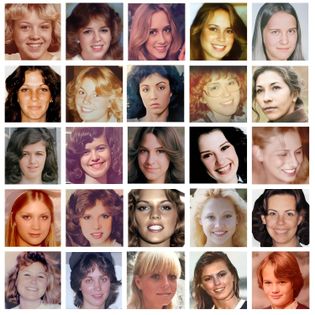
The official count stopped at nine. These are the women the world was never meant to remember.

Mindy was four years old the day her mother dropped her at daycare and walked away into the crowd.
She cried and cried. A teacher told her she was just throwing a tantrum. She wasn't. Somehow, even at four, she knew. Her mother, Terry Walden, never came to pick her up. Christopher Wilder had taken her.
Forty years later, Mindy is the only one who still puts flowers on the grave. She talks to her mum there — hi, Mum, I miss you — even though it feels strange to talk to the ground. She never had a Mother's Day. Her mum wasn't there when Mindy graduated. She won't be there when Mindy marries. And the cruellest part of all: Mindy can no longer remember her mother's voice.
That is what this episode is about. Not a killer. The women. The girls. The mothers. And the sound of them being heard, at last.
The promise we made
Six months ago, we made one promise. We would tell the story of every one of Christopher Wilder's victims. We would give them, and the families still living with the loss, a voice. We would make sure they are never forgotten.
We were warned not to. People told us that opening these wounds would be cruel, that families would rather leave the past alone. They were wrong. What we found is that these women had been waiting decades to speak about the people they loved — and that no one had ever asked.
So we asked. And they told us. And it changed everything — including us.
Not a look back. A live investigation.
Here is what people misunderstand about this podcast. We are not retelling an old story. We are running an active investigation into a killer whose true reach was never counted.
Along the way we have found new eyewitnesses — people who were there, who saw him, who have never spoken publicly until now. We have surfaced evidence that was missed at the time. We have put names to women who were filed away as Jane Does and left that way for decades. Cases marked unsolved and quietly forgotten are live again. Multiple police forces are now working leads that came directly out of this investigation.
And it is not slowing down. Tips are arriving from listeners in 165 countries. Every week brings something new. The official count of Wilder's victims stopped at nine. The truth, we now believe, is closer to thirty — which would put him alongside Ted Bundy. That number is not final. It is still growing. That is the point.
The women he took
Every one of these women had a whole life ahead of her. Here they are — not as case numbers, but as the daughters, sisters and friends their families still speak of in the present tense, because for them the love never stopped.
It may have begun long before America ever heard his name. In 1965, two teenage girls from Ryde, out for a day at Wanda Beach in Australia, were found in a shallow grave. For those who have looked closest at the evidence, there is no doubt in their minds who was responsible. If they are right, Wilder was killing nearly twenty years before the rampage the world remembers — and the true count reaches back further than anyone ever counted.

Rosario Gonzalez vanished from the Miami Grand Prix, handing out samples on a bright, busy day. Her fiancé, Bill, had already bought the wedding band. He was twenty-one. Forty years on, it is still the only thing he has of her. She was the nicest girl I ever met in my life, he says.

Beth Kenyon was a beauty queen who wanted to teach in Miami. She had poise, warmth, confidence — everything, sadly, that Wilder looked for. A private detective named him as a suspect and begged police to question him. They ignored the plea. She was last seen with Wilder.

Colleen Osborne was tiny — barely five foot two. She didn't stand a chance against Wilder. Just a little girl, her mother, Margaret, says. Nobody has the right. There shouldn't be those people. Grief, she says, changes how you see the world. You stop trusting it.

Terry Ferguson went to a shopping mall and never came home. She was twenty-one. Her mother, Frances, calls herself the mother of an angel, and speaks of her daughter with extraordinary peace. I can hardly wait to see her, she says. She is certain they will be reunited. I'm not going if I won't.

Terry Walden — Mindy's mum — was taken five days after Terry Ferguson. A nurse, a mother, doing laundry at night, dropping her little girl at daycare. The ferocity of what was done to her told investigators this was a man full of rage. Her daughter still dreams of her, standing silent, mouth closed, no voice. I want to know what her last words were, Mindy says. I feel like she was thinking about us right before the end.

Sheryl Bonaventura was an aspiring model who stuck up for people being taken advantage of. She disappeared from a shopping centre in Colorado — the same town Ted Bundy had passed through ten years earlier. When her remains were finally found, a young radio reporter named Dawn was sitting in the family's living room. Cheryl's mother told the press she was simply glad, at last, to know where her daughter was — that she was with the Lord.

Michelle Korfman played piano, loved photography, played volleyball, and told her mother she planned to be president by thirty-five. She drove to a beauty pageant in a Camaro her father had given her for good grades. The number plate read Daddy's Girl. Wilder was photographed at that pageant, sitting among the crowd. Michelle's body lay unclaimed as Jane Doe number 39, for over a month before dental records gave her name back. Her dad, Tony, told reporters: I know in my mind she was yelling for me. And that was the time I couldn't be there.

Suzanne Logan — Susie — was a ballet dancer, one of the kindest, sweetest people on the planet, her family says. Her brother John still remembers the horror of the funeral home. Her brother David was ten years old that day. As the family got ready to leave, he stopped them. I want to hold her hand one last time. Years later, David's tribute is simple: that the world should know his sister was a beautiful presence, stolen away far too soon.

Beth Dodge was a mother. She was late picking up her little girl that day. Her daughter, Stephanie, remembers waiting, remembers being lifted onto a kitchen counter by her father and told, gently, through tears: your mum's in heaven now. Beth was killed because Wilder wanted her car.
The ones who got away
Not every woman Wilder approached became a victim. Some fought. Some survived. And they are not footnotes — they are the reason we know so much.

Linda Grober was stalked for two days before he took her. For hours he tortured her, and all she thought about was survival. When the moment came, she jabbed her fingers into his eyes, ran, and got a door closed between them just as his hand reached it. That door saved her life. Her message now is simple, and she wants every woman to hear it: do not be a victim. Fight. Keep it together. Do not wait to be saved.

Penni was nineteen when she decided not to leave a mall with a stranger. It was Wilder. She has taught her own daughter what that day taught her: you fight where you stand, and you do not let them take you.

Tina was sixteen, and Dawnette was sixteen too. What they lived through is almost unbearable to hear. Tina survived seven days as Wilder's captive. Dawnette survived being stabbed and left for dead — and it was her courage, her escape, her description to police that finally began to close the net around him. Both have carried something heavy ever since. Why did I survive and they didn't? Tina asks. It's everyone's question.

There is no easy answer. But there is this: they lived, and because they lived, they can speak — for themselves, and for the women who can't.
The silence — and who kept it
Listen closely to this episode and one thing comes up again and again. The families begged police to act. And the police did not listen.
A private detective named Wilder as a suspect and pleaded with officers to question him. Ignored. Rosario's fiancé asked why the main suspect wasn't being picked up. Ignored. Nancy told police her loved one would never have run away. Does the police ever listen to you? she says now. In Miami, officers held a meeting about Wilder on the very day he was stalking his next victim.
He should have been stopped long before he reached any of these women. He wasn't. And the families were left not only with grief, but with the knowledge that it might have been prevented — and then, for decades, with silence.
That is the silence this episode ends. These women were kept quiet — by a killer, by an indifferent system, by a world that shies away from grief. Now their voices are here, and they are here for good.
Why it matters, and why it isn't over
We have learned something we didn't expect. Telling these stories is not reopening wounds. For these families, it is the opposite. It lets them express a love they never let go of. It lets them honour someone precious. And it lets them ask, finally, for the justice they were denied.
Their strength has stunned us — the strength of the families, and of the women themselves, many of whom fought with everything they had in their final moments. That strength was never seen. Now it is.
This is the penultimate episode. After next week, we'll step away for a short while — but not for long. There is more to come: more discoveries about Christopher Wilder, and a new investigation as soon as we can bring it to you. The work does not stop. New leads are still landing. New names are still being added.
You can help. Follow the podcast. Leave a rating and a review — it is the single biggest way to help these women be heard. And share this with someone who needs to know their names.
Because not all evil gets caught. But every victim deserves to be remembered.
The official count stopped at nine. The truth didn't — which is why next week's final revelations matter so much.
The case isn't closed. Start listening.
___________________
Help Us to Keep Investigating
Contact us here if you know something about Christopher Wilder. If you had an encounter with him, are you are a friend or a family member of someone who never made it home, we want to hear your story:
Email: info@catchingevil.com
_________________________
Catching Evil is committed to making a meaningful impact in the lives of those affected by violent crime, particularly in light of the chilling legacy of serial killer Christopher Wilder, who left behind a still-growing number of victims. In our pledge to honour these individuals and support their families, we donate to not-for-profit groups in both America and Australia.

Survivors of Homicide Inc, based in Connecticut, provides assistance to anyone who has lost a loved one to violent crime.
All services are offered to members free of charge, including one-on-one counselling, support groups, court support throughout the judicial process and personal advocacy in working with law enforcement and other community agencies.
It was founded in 1983, just before Christopher Wilder went on his rampage, by a group of families trying to cope with the murder of a loved one that shattered their lives.

When you donate to Yesterday Today Tomorrow Women, you are investing in the empowerment of women across generations. This Florida based nonprofit was founded by Kris Conyers, who was abducted off the street at gunpoint by Christopher Wilder when she was 11 years old.
YTT Women is dedicated to advancing women’s mental health and social wellbeing and contributions directly support community-based initiatives that raise awareness, provide resources, and foster safe, supportive spaces for women to grow and heal.

Mary’s House Services was founded in 2015 by a dedicated group of concerned citizens from Sydney’s northern suburbs, close to where Christopher Wilder was born and lived wth his family. Members of the local clergy, health authorities, philanthropists and community and business leaders came together to help provide safety for women and their children, victim-survivors of violence and abuse.
The Mary’s House refuge was established to address the significant gap in government funded services and to save lives in the region by providing critical support and a safe space to cope with their trauma and begin to rebuild their lives.
How to donate: https://mhs-summer-appeal-2025.raiselysite.com/#donate
Catching Evil, proudly a part of the Acast Creator Network, is an Original Voices presentation for Sticky Toffee Media


Comments