Unfinished Business
EPISODE 27

The serial killers classified ads stopped. The girls died.
The pattern no one ever saw — until now
For six months we made one promise: every victim of Christopher Wilder would be remembered. Every one would be given a voice. In this final episode, we keep that promise — and we bring news that changes everything we thought we knew about how long he killed, and how many.
The official count stopped at nine. By the end of this episode, you will understand why we believe the real number puts him beyond Ted Bundy.

The Tyre Murders
It came from a listener, days before we recorded.
In the mid-1970s, across Florida and five surrounding states, young women began disappearing from shopping centre car parks. Their tyres had been punctured or let down. A charismatic, well-dressed man would offer to help. Then they were gone — beaten, assaulted, their bodies left in canals and on remote roadsides.
Perhaps a dozen victims in Florida. Perhaps thirty more across five states. The same five states Wilder drove through in his 1984 spree.
He was living there. It was his hunting ground, his method, his physical type. And running in the Fort Lauderdale News, right through the killings, was Wilder's classified ad: an "escort service with something different," seeking attractive young women. A spider's web, printed daily.
The last victim was Michelle Winters, seventeen. She was found floating in a creek, strangled with her own purse strap. The ads stopped the day after her murder. Then Wilder was arrested for rape, put on probation — and the Tyre Murders stopped forever.
The pattern hidden in 3,500 ads

Wilder ran classified ads constantly — thousands of them, under dozens of phone numbers. Police in the 1980s could never have seen the pattern. Nothing was digitised. Now it is.
And here is what the ads reveal, uncovered with the help of Regan, one of our own listeners: when the ads stop, a woman dies. Overlay the gaps in Wilder's advertising onto the map of missing and murdered girls, and they match. Again and again and again.
In the '70s he advertised to find his victims. In the '80s he went silent while he took them. Either way, we contend the ads tell the story no one ever read.
Five new names
Using that pattern — and everything else we now know — we believe five more women could belong on Wilder's count. Police need to look at every one of them.
Tina Marie Beebe was 17. Petite, dark shoulder-length hair — his type, exactly. She told her sister a man had offered her modelling work. Her body was found in Loxahatchee, beside acreage Wilder owned. The ads stopped the week she vanished.
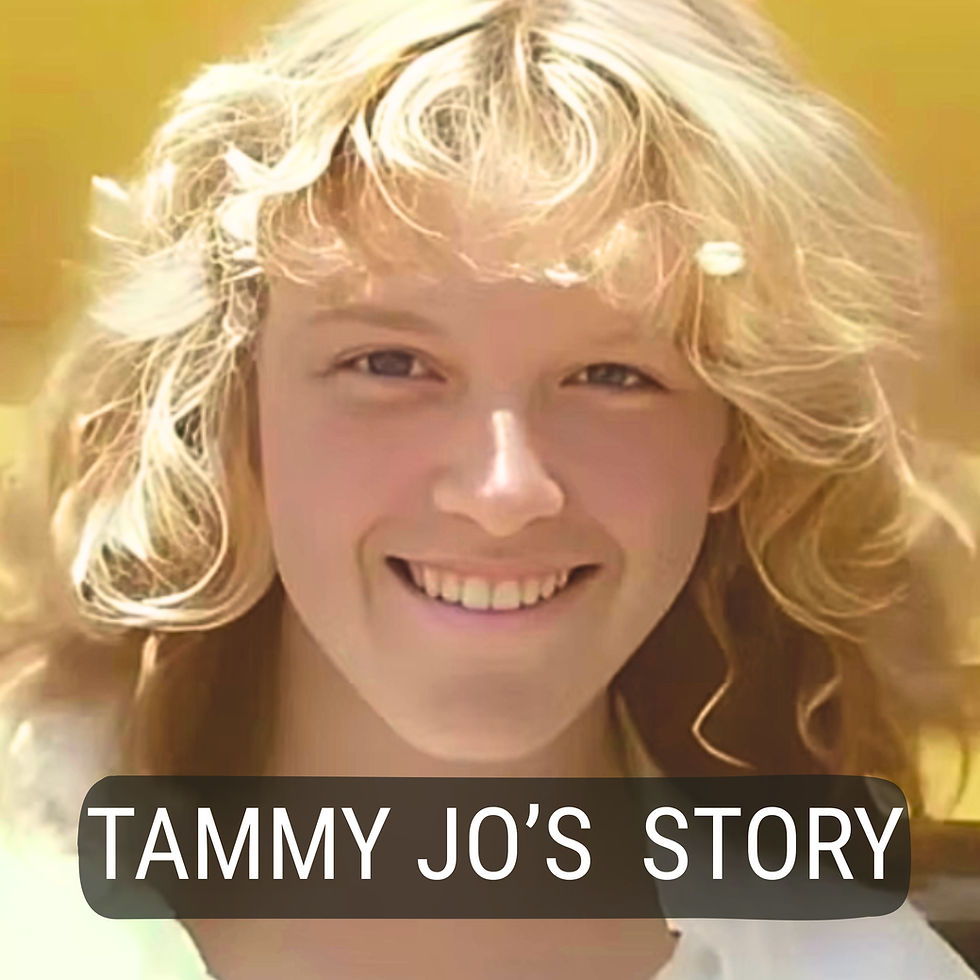
Leona Keller was 37. Shot in the head — like Ellery Jane Doe, like Tammy Jo Alexander. Her body was dumped in Loxahatchee, near Wilder's property, close to where Tina was found. The ads stopped for the months she was killed.
Robin Adler was 22. She vanished from Loxahatchee itself. Her car was staged beside a canal, crashed against an Australian pine — a tree this Australian killer's own father planted four of, one for each son, back home. She is still missing. The ads stopped the day before she disappeared.
Nancy Brown was 25. Taken from Cocoa Beach — where Tammy Leppert vanished a month earlier, where Terry Ferguson was taken the next year. Her body was found in Canaveral Groves, almost exactly where Wilder later got his car bogged with Terry Ferguson in the boot. He knew that place. The ads stopped for the whole month she vanished.
Laurie Kersey was 23. Found in a canal thirty miles from Wilder's home, ten days before Rosario Gonzalez disappeared from the Miami Grand Prix. Which asks a terrible question: did the spree the world remembers actually begin earlier — as the end of another?
The woman with no name
Of everything this series has uncovered, one case matters most to us. A woman found murdered in New York State. Petite. Dark curly hair. In her thirties. To this day, nobody knows who she is. Police call her Ellery Jane Doe.
"No one should be in a grave without a name. No one. And Jane Doe isn't a name."
That's Marja West — a respected Dutch investigative journalist who heard this podcast and joined the search, because Ellery's DNA traces to the Netherlands, Belgium or Germany. Somebody, somewhere, knows her.
And there is real hope. A listener believes they saw her at an Yves Saint Laurent gala in Manhattan — hours before she was murdered. Detectives have now been through the photographic archives from that night and identified 24 possible photographs of her. They are working through them now. In Canada, police are preparing to interview a man who may know her name.
If we can give Ellery Jane Doe her name back, it will be the greatest achievement of this series. When it happens — and we believe it will — you'll hear it here first.
The silence that never ends
Sixty years on, Wanda Beach still has no justice. Two 15-year-old girls, Marianne Schmidt and Christine Sharrock, murdered on a Sydney beach in 1965. Their families are still alive. Still waiting.
The police know who did it. In 2006 a full modern review named Wilder "the red-hot suspect." In 1984, days after Wilder died, the head of the Criminal Intelligence Branch admitted: "It was our intention to question him about Wanda Beach, but unfortunately that was not to be."
They had him. In custody, in Sydney, in 1982, charged with assaulting two 15-year-old girls. His own wife had told police in 1969 she believed he was the Wanda Beach killer. And when he applied for bail, police never told the magistrate he was a Wanda Beach suspect. They handed him back his passport. He flew to America and kept killing.
Somewhere in a laboratory sits the semen sample that would prove the case — booked in, never booked out. We have asked for a properly funded search. So has the press. The answer is silence.
The families deserve better. They always did.
The hug
Not everything in this episode is dark.
When we were last in America, Tim Kenyon — brother of Beth Kenyon, taken by Wilder in 1984 — called Andy on the highway. He wanted to meet, urgently. "I just want to meet you to give you a hug."
Since the episode about his sister aired, everything he'd kept bottled up for forty years was finally out. People come up to him now. For the first time in his life, he can talk about Beth.
"You've changed my life," he said.
That is why we made this podcast.
The roll call
We end the series the only way that felt right. No analysis. No killer. Just the names.
Christine Sharrock, 15. Marianne Schmidt, 15. Tammy Jo Alexander, 16. Mary Opitz, 17. Tina Marie Beebe, 17. Robin Adler, 22, still missing. Shari Lynn Ball, 20. Tammy Leppert, 18, still missing. A woman known only as Ellery Jane Doe. Nancy Kay Brown, 25. Laurie Kersey, 23. Rosario Gonzalez, 20, still missing. Elizabeth Kenyon, 23, still missing. Colleen Osborne, 15. Terry Ferguson, 21. Terry Walden. Suzanne Logan. Sheryl Bonaventura. Michelle Korfman. Beth Dodge, 33. And the survivors — Linda, Penni, Tina, Dawnette — who fought, and lived, and speak for those who can't.
Every one of them was a person. Every one of them was loved. Every one had a life ahead of her.
A pause. Not an end.
This series stops here for now. A new investigation is coming, and when there's a breakthrough — on Ellery, on Wanda Beach, on any of them — we'll be back with it immediately. Follow the show so you don't miss it. Leave a rating and a review; it is the single biggest way to help these women be heard. Share this with someone who needs to know their names.
Because not all evil gets caught. But every victim deserves to be remembered.
Thank you for joing us on the journey so far.
The case isn't closed. Keep listening and sharing the podcast details and we'll be back soon.
_____________________
Help Us to Keep Investigating
Contact us here if you know anything about Christopher Wilder or any of his victims
Email: info@catchingevil.com
_________________________
Catching Evil is committed to making a meaningful impact in the lives of those affected by violent crime, particularly in light of the chilling legacy of serial killer Christopher Wilder, who left behind a still-growing number of victims. In our pledge to honour these individuals and support their families, we donate to not-for-profit groups in both America and Australia.

Survivors of Homicide Inc, based in Connecticut, provides assistance to anyone who has lost a loved one to violent crime.
All services are offered to members free of charge, including one-on-one counselling, support groups, court support throughout the judicial process and personal advocacy in working with law enforcement and other community agencies.
It was founded in 1983, just before Christopher Wilder went on his rampage, by a group of families trying to cope with the murder of a loved one that shattered their lives.

When you donate to Yesterday Today Tomorrow Women, you are investing in the empowerment of women across generations. This Florida based nonprofit was founded by Kris Conyers, who was abducted off the street at gunpoint by Christopher Wilder when she was 11 years old.
YTT Women is dedicated to advancing women’s mental health and social wellbeing and contributions directly support community-based initiatives that raise awareness, provide resources, and foster safe, supportive spaces for women to grow and heal.

Mary’s House Services was founded in 2015 by a dedicated group of concerned citizens from Sydney’s northern suburbs, close to where Christopher Wilder was born and lived wth his family. Members of the local clergy, health authorities, philanthropists and community and business leaders came together to help provide safety for women and their children, victim-survivors of violence and abuse.
The Mary’s House refuge was established to address the significant gap in government funded services and to save lives in the region by providing critical support and a safe space to cope with their trauma and begin to rebuild their lives.
How to donate: https://mhs-summer-appeal-2025.raiselysite.com/#donate
Catching Evil, proudly a part of the Acast Creator Network, is an Original Voices presentation for Sticky Toffee Media


Superb podcast.