Episode 14: A Serial Killers' Playground
Updated: Apr 15

She Had Cowboy Boots, Big Dreams and a Ski Trip Planned. Then Serial Killer Christopher Wilder Pulled a Gun On Her.
This is Sheryl's story

It was supposed to be the beginning of spring break.
Eighteen-year-old Sheryl Bonaventura had spent the night at her best friend Krystal's house, the two of them staying up late, talking and laughing and planning their trip to Aspen. All Sheryl had to do the next morning was swing by Mesa Mall in Grand Junction, Colorado, pick up her paycheck and grab a few last-minute things. It would take an hour, tops. Then the two friends would hit the road together.
Krystal waited. Sheryl never came.
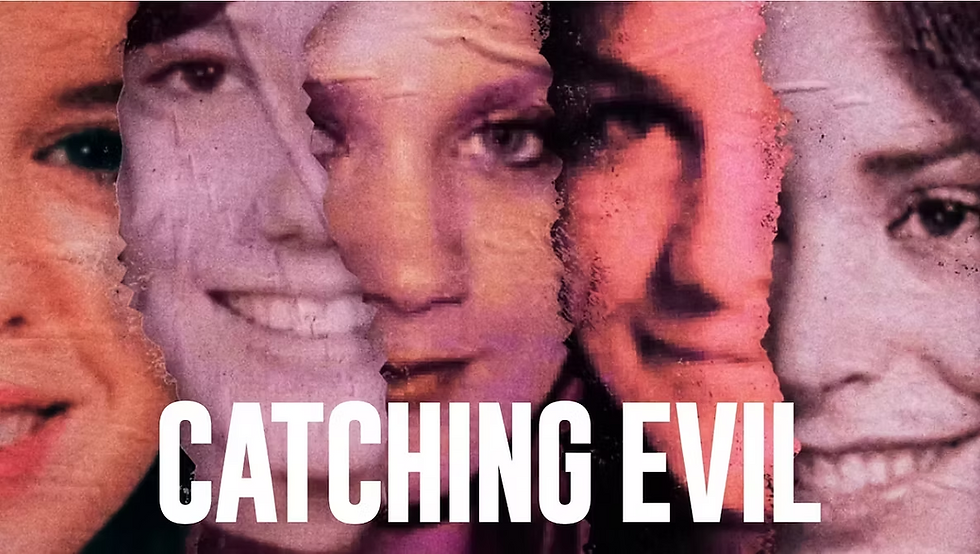
Episode 14 of Catching Evil — The Serial Killers' Playground — is one of the most harrowing instalments of the series. It tracks Christopher Wilder across thousands of miles of American highway during the spring of 1984, a period in which he was murdering young women with terrifying frequency while the FBI, tangled in conflicting information and bureaucratic confusion, scrambled to keep up. By the time they identified his latest victim, he was already hundreds of miles away, hunting again.
A Killer Hiding in Plain Sight
One of the most extraordinary revelations in this episode comes not from a law enforcement file but from a living room in Florida, where retired homicide detective Tom Neighbours shares his personal case notes from the manhunt. Tom's proximity to Wilder was uncomfortably close — his wife Dana was the seamstress for Wilder's racing team, and Wilder had been a regular visitor to their home. He was due there the very day he went on th run and started his murderous rampage.
The morning Tom saw Wilder's name on an urgent FBI BOLO alert at roll call, his blood ran cold. 'The guy's got a record and he's been in my house.' His wife Dana, who had been alone with Wilder many times, tells Catching Evil something that speaks volumes about how this predator operated. "There isn't a woman alive," she said quietly, "who would not have voluntarily gone with him."
Tom's access to Wilder's sex therapist, Ginger Bush, proved crucial to the investigation. Her notes painted a portrait of a man on the very edge — a powder keg, she called him — consumed by fantasies of white slavery, sadomasochism and total domination. She warned the FBI that his behaviour would become increasingly frenzied and violent as the media pressure mounted. She was right. She also revealed that Wilder had drugged a rape victim in 1981 with a microdot of LSD slipped into a pizza — a fact the courts had been unable to prove at the time. Justice, as this podcast has repeatedly shown, has a very long memory.
The Girl Who Never Made It to Aspen
Sheryl Bonaventura was everything Wilder looked for. Blonde, blue-eyed, eighteen years old, with dreams of modelling and a whole life ahead of her. She had even recreated the famous Flashdance movie poster for a photo shoot — and Wilder, who had seen that film seven times and targeted women who resembled its star, was almost certainly drawn to her for exactly that reason.
Krystal's testimony is heartbreaking in its ordinariness. Two best friends. Big plans. One quick trip to the mall. "I know he approached many girls that day," she says. "Typically I would have been with her." She pauses. The weight of that sentence needs no elaboration.

What followed was two days of unrelenting horror. Wilder drove Sheryl south through the Rocky Mountains to the historic mining town of Silverton, where a waitress at a local diner served them and noted that the young girl seemed nervous, talking in a strange singsong voice, giving her full name unprompted and mentioning they were headed to Las Vegas. The waitress didn't connect the dots. Under the table, Wilder's .357 Magnum was trained on Sheryl throughout.
Sheryl's best friend Krystal believes she was drugged. She also believes Sheryl was trying to send a message. "She would have fought to get away from him," she says, "especially if other people were around."
The FBI report on what was found when Sheryl's body was eventually discovered weeks later in the Utah desert is almost too brutal to read aloud. And yet the Catching Evil team does, because Sheryl Bonaventura deserves to be more than a statistic. She deserves to be remembered.
A Town Cursed Twice
Perhaps the most chilling detail in this episode is one that seems almost too strange to be coincidence. Grand Junction, Colorado — the quiet mountain city where Wilder snatched Sheryl — had been hunting ground for another serial killer a decade earlier. Ted Bundy passed through, abducting and murdering a local girl whose remains were never found. In his final minutes before the electric chair, Bundy directed investigators to the Colorado River, five miles west of Grand Junction.
Two of America's most notorious serial killers. The same small, isolated city on Interstate 70. The same profile of victim. Dawn, the radio reporter who was at Mesa Mall that very afternoon and who covered Sheryl's disappearance for local radio, puts it plainly. "The fact that we had two serial killers kidnapping and murdering women in the same way — I always thought that was really strange."

Dawn's connection to this story runs deeper than journalism. She reveals in this episode that she herself was the victim of a sexual assault in Denver in the 1970s — a crime that was never solved and never properly investigated.
"Back then I don't think they even took you as seriously as they
do now," she says. "That still haunts me. It's been fifty-one years." Her decision to keep telling Sheryl's story, she explains, is partly an act of solidarity. "I feel like I honour Sheryl because I am talking about her all these years later. Giving her the voice she didn't have."
The Collector
Running through this episode like a dark thread is Wilder's obsession with John Fowles' novel The Collector — the story of a man who kidnaps a young woman and keeps her captive. A copy was found in Wilder's home, heavily underlined. Another was in his car. In his house, investigators discovered a hidden torture chamber — chains, whips, photographic equipment — that spoke directly to his fantasy of total domination. His sex therapist had noted his fixation on white slavery. The dots, horrifyingly, all connected.
By this point in the rampage, Wilder wasn't simply killing. He was living out the fantasy he'd been rehearsing for years. The rules were his. The power was his. And some victims, the hosts reveal, were kept alive longer than others — not by chance, but by design. Wilder had what he called "rules of the game." Those rules, and what they mean, will be explored in upcoming episodes.
What Comes Next
Episode 14 ends with two significant teasers that will have loyal Catching Evil listeners reaching immediately for the next instalment. A forty-year-old mystery surrounding a Las Vegas modelling competition is about to be solved — and the team has found the man who sat next to Wilder in the front row. And a major breakthrough in a New York Jane Doe cold case that has stumped police for forty-three years has come directly from Catching Evil listeners, whose tips are now actively reopening cases.
Sheryl Bonaventura was eighteen years old. She had a job, a best friend, a ski trip planned, and cowboy boots with silver toe caps. She had recreated the Flashdance poster and was dreaming of a modelling career. She and Krystal had secret names for each other — she was Jess, Krystal was Francesca — and they couldn't wait to leave their small town and see what the world held.
Christopher Wilder took all of that. Every single bit of it.
She should not be forgotten, says Dawn. Because she was a beautiful young lady with her whole life ahead of her.
This podcast makes sure she isn't.
______________________________
They were the best of friends. They did everything together. Kristal should have been with Sheryl when she went to the mall to pick up her pay check. Sheryl, blonde, blue-eyed, beautiful and alone, was targeted by a ruthless predator.


__________________________
The Collector: Wilder's Blueprint for Terror
John Fowles' 1963 novel The Collector tells the story of Frederick Clegg, a lonely, obsessive man who kidnaps a young woman and holds her captive, convinced that if she spends enough time with him she will grow to love him. It is a story about power, control and the dehumanisation of women.
Christopher Wilder was obsessed with it. A heavily underlined copy was found in his home. Another was in his car. Investigators also discovered a hidden torture chamber in his house, equipped with chains, whips and photographic equipment. His sex therapist noted his fixation on white slavery and total domination.
Wilder didn't just read The Collector. He used it as a manual. His behaviour during the 1984 rampage directly mirrored the novel's plot — keeping victims captive, travelling long distances with them, staging photographs. The rules of that deadly game will be revealed in upcoming episodes.
______________________________
Contact us here if you know something about Christopher Wilder. If you had an encounter with him, are you are a friend or a family member of someone who never made it home, we want to hear your story:
Email: info@catchingevil.com
Record a voice message: https://www.speakpipe.com/catchingevil
______________________________
Catching Evil is committed to making a meaningful impact in the lives of those affected by violent crime, particularly in light of the chilling legacy of serial killer Christopher Wilder, who left behind a still-growing number of victims. In our pledge to honour these individuals and support their families, we donate to not-for-profit groups in both America and Australia.

Survivors of Homicide Inc, based in Connecticut, provides assistance to anyone who has lost a loved one to violent crime.
All services are offered to members free of charge, including one-on-one counselling, support groups, court support throughout the judicial process and personal advocacy in working with law enforcement and other community agencies.
It was founded in 1983, just before Christopher Wilder went on his rampage, by a group of families trying to cope with the murder of a loved one that shattered their lives.

When you donate to Yesterday Today Tomorrow Women, you are investing in the empowerment of women across generations. This Florida based nonprofit was founded by Kris Conyers, who was abducted off the street at gunpoint by Christopher Wilder when she was 11 years old.
YTT Women is dedicated to advancing women’s mental health and social wellbeing and contributions directly support community-based initiatives that raise awareness, provide resources, and foster safe, supportive spaces for women to grow and heal.

Mary’s House Services was founded in 2015 by a dedicated group of concerned citizens from Sydney’s northern suburbs, close to where Christopher Wilder was born and lived wth his family. Members of the local clergy, health authorities, philanthropists and community and business leaders came together to help provide safety for women and their children, victim-survivors of violence and abuse.
The Mary’s House refuge was established to address the significant gap in government funded services and to save lives in the region by providing critical support and a safe space to cope with their trauma and begin to rebuild their lives.
How to donate: https://mhs-summer-appeal-2025.raiselysite.com/#donate
Catching Evil, proudly a part of the Acast Creator Network, is an Original Voices presentation for Sticky Toffee Media



Comments