Episode Six: Jane Doe

The Little Girl in the Pink Bikini: How Police Inaction Let a Serial Killer Hunt Again

Margaret Orsborne has carried her sister's death for four decades. The weight of it shaped how she raised her daughter, how she looks at strangers, how she moves through a world that stole a 15-year-old girl in broad daylight.
"This experience, it changes how you look at the world," Margaret says quietly. "You don't trust it."
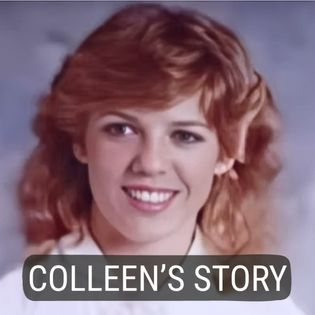
This is the story of Colleen Orsborne—one of Christopher Wilder's youngest victims. A tiny girl, just 160 centimetres tall, wearing a pretty pink bikini that caught a monster's eye. And it's the story of catastrophic police failure that let that monster hunt when he should have been in custody.
The Powder Keg Ready to Explode
March 13, 1984. Christopher Wilder's 39th birthday. And he's terrified.
Private detective Ken Whittaker is closing in. Two beauty queens—Beth Kenyon and Rosario Gonzalez—have vanished, and Whittaker knows Wilder is responsible. He's called Wilder directly, confronted him, sent big intimidating guys to sit in his office.
"I said, 'Chris, this is looking at you, buddy. I believe you took Beth,'" Whittaker recalls. "He thought he was more intelligent than anybody else. So cocky as hell."
But beneath the cockiness, Wilder is panicking. He immediately calls his sex therapist, Ginger Bush, railing against the "bastard" private detective harassing him. Bush tries to calm him down, but at the end of the session, she writes something chilling in her notes:
'Powder keg ready to explode.'
Before leaving, Wilder books another session for Thursday. He has no intention of keeping it.

The Escape Plan
Wilder meets his business partner Zeke in a pizzeria parking lot—nowhere near his house, which he believes Whittaker is watching.
"He called me and said they were watching him at the house," Zeke remembers. "That private investigator made him fu**ing nuts."
Wilder has packed everything into his car. He's running. And Zeke, still believing his partner is innocent, hands over his credit cards so Wilder can't be traced.
"That way they wouldn't know he was on his way to Mexico," Zeke explains. But Wilder isn't heading to Mexico. He's heading north—to hunt.
The Failure That Cost a Life
While Wilder is preparing to flee, what are Miami police doing?
The detective given the case late and who refused to accept Ken Whittaker's evidence, issues his first press release about Beth Kenyon's disappearance. His conclusion? No evidence of foul play. Not a homicide. Just a missing person.
No urgency. No manhunt. No immediate action. And that failure freed Christopher Wilder to find and kill Colleen Osborne.
The Day Everything Changed
Thursday, March 15, 1984. Crime reporter Edna Buchanan publishes a bombshell story in the Miami Herald, linking the disappearances of Rosario Gonzalez and Beth Kenyon. She describes a man seen with both women—an Australian-born race car driver.
She doesn't name Wilder. She doesn't have to. He knows she's talking about him.
He checks out of his Daytona Beach hotel that morning and goes hunting.
Around 9:30 AM, he drives down West Olive Road. He approaches a young girl named Angela Graham at a basketball court. She refuses him. He drives off.
That's when he sees Colleen. Fifteen years old. Tiny. Wearing a pink bikini. Walking alone.
Colleen was only 160 centimetres tall and Wilder was 6 foot. She is never seen alive again.

She Was a Little Girl
"You couldn't make sense of it," Margaret says, her voice breaking. "It was a little girl. A little girl. Nobody has the right. There shouldn't be those people."
Margaret has lived with this for 40 years. She's raised a daughter who grew up in the shadow of an aunt she never met. She's watched her granddaughter reach the age Colleen was when she died—and felt the terror of knowing how vulnerable 15-year-old girls are.
"You learn to live with grief," Margaret says. "You never get over grief. It's always there."

For years, Margaret stayed silent. The pain was too overwhelming. The questions too impossible. How do you make sense of a world where a little girl in a pink bikini can be stolen in broad daylight?
But now, she's speaking. Because Colleen wasn't a Jane Doe. She wasn't a statistic. She wasn't just another red dot on a detective's map.
"She was loved. She is still loved. We miss her," Margaret says firmly. "She was a beautiful young woman with her life ahead of her."
The Generational Wound
Margaret's story reveals something true crime too often ignores: the generational impact of violence. Her daughter grew up shaped by an aunt's murder. Her granddaughter is now learning how one man's evil rippled through decades, affecting people he never met.
"A lot has happened the last couple of years," Margaret explains, "and it kind of puts a lot of the past in perspective. My daughter has a daughter of her own now, so we've been going over some of the past and she's looking back at how it affected her life."
This is what Christopher Wilder left behind. Not just bodies, but shattered families. Children who grew up without aunts. Mothers who couldn't trust the world. Generations taught that evil doesn't just take—it keeps taking, year after year after year.

The Last Moment
Margaret says, "You never know that last moment."
Colleen's last moment was an ordinary morning. A walk near her home. A pink bikini. A man in a car who seemed charming, legitimate, safe.
If police had acted when they should have, Colleen would have had thousands more moments. A first love. A graduation. A wedding. Children. Grandchildren. A life.
Instead, Margaret has only grief—and the certain knowledge that her sister's death could have been prevented.
A Final Goodbye
In 2011, DNA finally confirmed Jane Doe was Colleen. At her memorial, Margaret whispered the words she'd carried for 27 years: "I'm sorry. I think we all felt that we failed her." The guilt never left. The pain never dimmed. And the little sister who loved being the centre of attention remained forever fifteen.
______________________
A Mother's Endless Search
While the FBI and local police pursued their investigation, Colleen's mother began her own desperate quest, never stopping the search for her daughter, clinging to hope that somewhere, somehow, Colleen might still be alive.
It was a mother's love that refused to accept defeat—a love that would ultimately help bring her daughter home.
The Long Road to Identification
For more than two decades, Colleen lay in a morgue, labelled only as "Jane Doe." Her remains had been discovered, but without the technology to make a positive identification, she remained nameless—another faceless victim in Wilder's wake.
Then, 26 years after her disappearance, advances in DNA technology and a careful review of medical records finally provided the answer her family had waited for. Jane Doe had a name: Colleen Orsborn.
A Bittersweet Homecoming
The identification brought both closure and heartbreak. After decades of uncertainty, Colleen's family could finally lay her to rest properly. They could say goodbye, hold a funeral, and know where their daughter was.
But the victory was overshadowed by a cruel irony: Colleen's mother, who had spent so many years praying for her daughter's return, had died before the identification was made. The woman who never gave up hope, who kept Colleen's memory alive through decades of uncertainty, would never get to attend her daughter's funeral.
The Victims Who Remain Lost
Colleen's story highlights both the possibility of closure and the ongoing tragedy of Wilder's crimes. While her family finally found peace, the families of Rosario Gonzales and Beth Kenyon—Wilder's earlier victims—continue to wait. Their daughters' bodies have never been found.
The FBI may have quickly identified Wilder as a suspect, but his ability to hide his victims' remains has left some families in permanent limbo, still searching for answers that may never come.
____________________________
Help Us Uncover the Truth One Episode at a Time

They had dreams. They had futures. And then, they were gone. Stolen by the monster known as Christopher Wilder. Their names should have been etched in history, their stories told—but instead, they faded into the shadows, forgotten by a world that moved on too quickly. Not anymore.
We are here to give a voice to the voiceless, to remember the girls who never made it home, the ones whose laughter was silenced, whose dreams were stolen. This platform is a monument to them, ensuring they are never just another statistic or cold case. We want the world to remember who they were, what they could have been, and what was taken from them.
But remembering isn’t enough. That’s why we’re putting a share of our revenue directly to charities supporting victims of violence in America and Australia. These organizations fight for justice, provide support, and help survivors rebuild. This isn’t just about the past—it’s about making damn sure this never happens again.
This is Catching Evil.
Email: info@catchingevil.com
________________________________________
Catching Evil is committed to making a meaningful impact in the lives of those affected by violent crime, particularly in light of the chilling legacy of serial killer Christopher Wilder, who left behind a still-growing number of victims. In our pledge to honour these individuals and support their families, we donate to not-for-profit groups in both America and Australia.

Survivors of Homicide Inc, based in Connecticut, provides help to anyone who has lost a loved one to violent crime.
All services are offered to members free of charge, including one-on-one counselling, support groups, court support throughout the judicial process and personal advocacy in working with law enforcement and other community agencies.
It was founded in 1983, just before Christopher Wilder went on his rampage, by a group of families trying to cope with the murder of a loved one that shattered their lives.

When you donate to Yesterday Today Tomorrow Women, you are investing in the empowerment of women across generations. This Florida-based not-for-profit was founded by Kris Conyers, who was abducted off the street at gunpoint by Christopher Wilder with her sister when she was 11 years old.
YTT Women is dedicated to advancing women’s mental health and social wellbeing. Contributions directly support community-based initiatives that raise awareness, provide resources, and foster safe, supportive spaces for women to grow and heal.

Mary’s House Services was founded in 2015 by a dedicated group of concerned citizens from Sydney’s northern suburbs, close to where Christopher Wilder was born and lived wth his family. Members of the local clergy, health authorities, philanthropists and community and business leaders came together to help provide safety for women and their children, victim-survivors of violence and abuse.
Mary’s House refuge was established to address the significant gap in government-funded services and to save lives by providing critical support and a safe space for people to cope with their trauma and begin to rebuild their lives.
How to donate: https://mhs-summer-appeal-2025.raiselysite.com/#donate
Catching Evil, proudly a part of the Acast Creator Network, is an Original Voices presentation for Sticky Toffee Media


Comments