Murder & Mystery at the Mall - The Missing Pt III
EPISODE 25

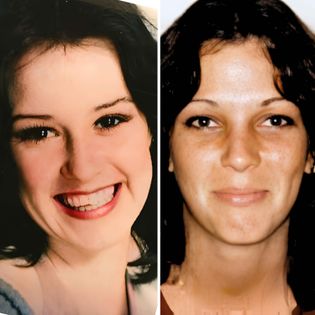
Two Girls Named Mary: The Mall Murders Hiding in Plain Sight

She left a bag of pretzels on the roof of her mother's car. That was the last trace of her.
It was January 1981, at the Edison Mall in Fort Myers, Florida. Seventeen-year-old Mary Opitz had spent the afternoon shopping with her mother, Nancy, and her older brother Chris, hunting for a birthday present for a family friend. Mary got tired.
Mary took the shopping from her mother, said she'd wait at the car, and walked out into the evening carrying the packages and a bag of pretzels.
Fifteen minutes later, Nancy followed. The packages were there, sitting on top of the car. The pretzels were there. Mary was not.
"I knew it had to be something bad," Nancy says, "because she wouldn't have left the stuff on top of my car."
She was right. More than four decades later, Mary Opitz has never been found.
A second girl. The same parking lot.

What turns a tragedy into something far more sinister is what happened four weeks later.
On 11 February 1981, eighteen-year-old Mary Hare vanished from the exact same parking lot, in almost the exact same circumstances. Another young woman. Another night. Another car left behind — a green Buick LeSabre — and no sign of its owner.
Two girls named Mary. The same mall. Four weeks apart. They had brown hair, hazel eyes, and the same age. They'd gone to the same school — North Fort Myers High. Put their photographs side by side, as their families have, and they could be sisters. "They could have been sisters," Mary Opitz's brother William told us. "If you put their pictures next to each other."
Mary Hare's story ended in the cruelest way. Her body was found four months later in a ditch in Lehigh Acres half an hours drive away — stabbed in the back. A single shoe. A broken piece of necklace chain. Investigators searched the surrounding land by air, on horseback, and on foot, hoping it might lead them to the other missing Mary too.
It never did.
The case that fell through the cracks
If you've listened to Catching Evil, you'll recognise the next part, because we've heard it again and again: the police didn't act quickly enough.
When the Opitz family first reported Mary missing, they were told it was probably a runaway — wait 24 hours. The family knew better. Mary had a job. Money in the bank. She was decorating her bedroom and excited about getting her braces off. She'd left her purse, her money, and every possession behind. "She wouldn't have run away," Nancy told the officers. "She was getting her life together."
They didn't listen. In fact, the family later learned the Fort Myers Police Department didn't formally record Mary as a missing person for thirty days. Thirty days in which, as her brother Chris puts it, "nobody did anything."
So the family investigated themselves. Chris stayed awake for three days straight, going door to door among Mary's friends. William went to local biker gangs to ask hard questions. They chased every lead the authorities wouldn't. And in the decades since, the not-knowing has hollowed them out. Chris keeps a small shrine to his sister in his room. "I get up every morning and look at it," he says, "and say good morning. Love you." He has never forgiven himself for staying behind in the mall that day. "If I would've went with her, it might've been different."
Where Christopher Wilder comes in

Here is what nobody connected at the time — and what Catching Evil has spent this series uncovering.
In 1984, Christopher Wilder cut a murderous path across America in a rampage so brutal it triggered the largest manhunt in FBI history. But the public only knows the rampage. What investigators are only now beginning to understand is how long he'd been hunting before it — and how good he had become at it.
His method was chillingly consistent. A shopping mall. A pretty young woman returning to her car. A charming, well-dressed man posing as a fashion photographer, offering modelling work, a brighter future, a way out. The list of women he took from malls reads like a roll call: Terry Ferguson. Linda Grober. Terry Walden. Sheryl Bonaventura. Suzy Logan. Tina Reziko. Dawnette Wilk. Beth Dodge.
Now add a detail most people never knew: Wilder was an endurance racing driver who thought nothing of driving a thousand miles in a weekend to stalk a single girl. Florida was his backyard. "No distance was too long."
The very reason police dismissed him as a suspect in the Mary cases — he couldn't have been in the area — was based on a misunderstanding of how far this man roamed.
The pattern hidden in the classifieds
This is where the investigation turned live.
Working through Wilder's paper trail, Catching Evil uncovered something extraordinary: in just three years before the rampage, Wilder placed more than 3,500 individual classified ads — using 35 different phone numbers and 12 aliases. The ads were how he trawled for victims and traded in cars and land.
And the ads have a tell.
When Mary Opitz vanished on 16 January 1981, Wilder had been running ads almost daily through the first half of the month. They stop the day before she's taken. They resume two days later. It is the only gap in the entire period.
Mary Hare disappeared on 11 February. In the days just before — the 7th and 8th — Wilder was advertising parcels of remote rural land in Georgia: isolated, surrounded by water, a stone's throw from his favourite highway, the I-95. Then the ads stop again.
Remote land. Lots of water. Beside the road he drove between Florida and New York. It's a detail we are now passing directly to police, with a simple question: did anyone ever search that land?
It isn't proof. We've never claimed it is. But when the same stark gap appears before murder after murder, coincidence starts to look like a signature.
The family who don't all agree — and why that matters
We could have tied this off with a neat verdict. We didn't, because the truth is messier and more human than that.
William's daughter Casey has spent years as an amateur sleuth in her own great-aunt's case, and she came to us a sceptic. Having read Mary's teenage diary, Casey sees a girl her own family never fully knew — troubled, restless, searching for an "out," vulnerable to anyone who promised her a better life. Casey doubted Wilder was involved at all, partly because she'd read he wasn't in the area.
Then, on the phone with us, she learned how far Wilder travelled to stalk. How he preyed on exactly the kind of young woman who was looking for a way out, dangling false promises of modelling and escape. You can hear her certainty waver in real time. "You're making me backpedal a little bit," she admits. "I don't know. I don't know."
That honesty is the point. We aren't here to convict a dead man in a podcast. We're here to drag forgotten cases back into the light and ask the questions police should have asked decades ago.
And there's a third name

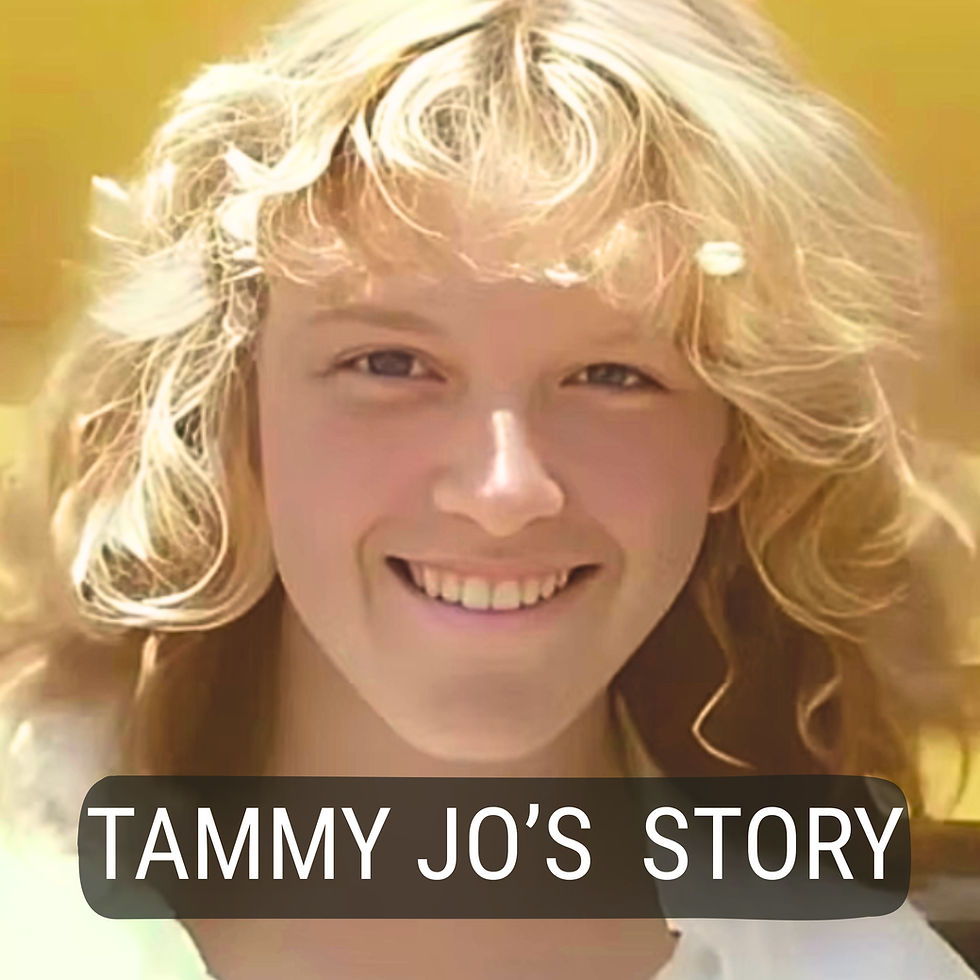
This episode carries a third young woman: Tammy Lynn Leppert — a stunningly beautiful teenage beauty queen with 280 pageant crowns and roles in Scarface and Spring Break, who vanished from Cocoa Beach in 1983. The links to Wilder here are arguably even closer: he'd met Tammy on a film set, became fixated, and repeatedly pressed her mother to let him photograph her. Cocoa Beach was his favourite hunting ground — the very place Terry Ferguson, from our first episode, was taken. Tammy's mother was so certain of his guilt she launched a million-dollar lawsuit against him.
Tammy, too, has never been found.
The last word belongs to Nancy
Through all of it, one voice anchors this episode. Nancy is eighty-seven now. She still has things from Mary's hope chest. She still hopes her daughter might one day walk through the door.
"I'm hoping I stay alive long enough to see her come home," she says.
And if the news is different — if one day someone tells her the worst? She wants to know anyway.
"It'll give me closure," she says. "I always ask myself — if somebody took her, where, and who is it? To know who did it... that would mean a lot. If I could talk to them and ask them. Why."
The official count of Christopher Wilder's victims stopped long ago. The truth didn't.
Two girls named Mary. The same mall. Four weeks apart. One name on a list that's still growing.
🎙️ Catching Evil EP25 — The Missing, Part 3: Murder & Mystery at the Mall. The case isn't closed. Start listening. Link at top of page.
___________________
The Official count stopped at 9. The truth didn't. Help us give them all a voice and make sure they are never forgotten.

They had dreams. They had futures. And then, they were gone. Stolen by the monster known as Christopher Wilder. Their names should have been etched in history, their stories told—but instead, they faded into the shadows, forgotten by a world that moved on too quickly. Not anymore.
We are here to give a voice to the voiceless, to remember the girls who never made it home, the ones whose laughter was silenced, whose dreams were stolen. This platform is a monument to them, ensuring they are never just another statistic or cold case. We want the world to remember who they were, what they could have been, and what was taken from them.
But remembering isn’t enough. That’s why we’re putting a share of our revenue directly to charities supporting victims of violence in America and Australia. These organizations fight for justice, provide support, and help survivors rebuild. This isn’t just about the past—it’s about making damn sure this never happens again.
This is Catching Evil.
Email: info@catchingevil.com
________________________________________
Catching Evil is committed to making a meaningful impact in the lives of those affected by violent crime, particularly in light of the chilling legacy of serial killer Christopher Wilder, who left behind a still-growing number of victims. In our pledge to honour these individuals and support their families, we donate to not-for-profit groups in both America and Australia.

Survivors of Homicide Inc, based in Connecticut, provides help to anyone who has lost a loved one to violent crime.
All services are offered to members free of charge, including one-on-one counselling, support groups, court support throughout the judicial process and personal advocacy in working with law enforcement and other community agencies.
It was founded in 1983, just before Christopher Wilder went on his rampage, by a group of families trying to cope with the murder of a loved one that shattered their lives.

When you donate to Yesterday Today Tomorrow Women, you are investing in the empowerment of women across generations. This Florida-based not-for-profit was founded by Kris Conyers, who was abducted off the street at gunpoint by Christopher Wilder with her sister when she was 11 years old.
YTT Women is dedicated to advancing women’s mental health and social wellbeing. Contributions directly support community-based initiatives that raise awareness, provide resources, and foster safe, supportive spaces for women to grow and heal.

Mary’s House Services was founded in 2015 by a dedicated group of concerned citizens from Sydney’s northern suburbs, close to where Christopher Wilder was born and lived wth his family. Members of the local clergy, health authorities, philanthropists and community and business leaders came together to help provide safety for women and their children, victim-survivors of violence and abuse.
Mary’s House refuge was established to address the significant gap in government-funded services and to save lives by providing critical support and a safe space for people to cope with their trauma and begin to rebuild their lives.
How to donate: https://mhs-summer-appeal-2025.raiselysite.com/#donate


Comments