The Missing
Episode 23

They Laughed at Him and Lived. She Believed Him and Died.

Two young mothers were running a yard sale on a summer morning in 1983 when a black sports car pulled up. The man who stepped out had a camera around his neck and gold chains glinting at his collar. He was charming, well-dressed, smooth. He told them they could be models.
They laughed at him.
That laughter saved their lives.
The man was Christopher Wilder — and in just nine months, his face would appear on the FBI's Most Wanted list, his name attached to one of the most savage killing sprees in American history. But on that ordinary July morning, to Jari and Shane, he was just a stranger who couldn't take a joke.
"To me, it feels like it was yesterday," Jari says. "I did not realize at the time that I met him how close I was to having my life ended."
"Have You Ever Thought of Modeling?"

It began the way it always began. Wilder approached Jari first — she was closest to the sidewalk, her friend Shane a few steps back, their children milling around them. He made small talk about the sale. Then he turned to her.
"Oh my," he said. "Have you ever thought of modelling?"
Jari chuckled. "No, not really."
Normally, she admits, she was a gullible person. But something about this man rang false. "I thought to myself, this guy's off his rocker if he thinks I can be a model. There's no way I am model material."
When Shane joined them and laughed at him too, Wilder's charm slipped. He got annoyed. He marched back to his car — and returned with an enormous 8×10 portfolio. Inside were photographs of dozens of beautiful young women.
Among them, the best friends are certain, was Beth Kenyon — the beauty queen who had turned down Wilder's marriage proposal, who lived just around the corner. Wilder even boasted that he'd visited the Kenyon family store that very morning.
Jari and Shane were leafing through a serial killer's hunting album.
"He stalked women and girls who were vulnerable," Jari reflects now. "Who wanted attention, who needed to be verified." Shane finishes the thought: "And they had backgrounds like Shari Lynne Ball — where they were just seeking something."
The One Who Believed Him
Shari Lynne Ball was 20 years old. Born in West Virginia, raised between Georgia and Florida, her father long gone, she had come from a hard start and was looking for a way up. Just days before Wilder pulled up to that yard sale, he had almost certainly found her.
One evening in June 1983, Shari ate dinner with her mother, Nancy. She took a shower. She packed two bags and said she was heading to New York with a friend to chase a modelling career. It was around 5:30pm. She left — but she didn't take her bags. She'd be back for them, she figured.
She called home one last time at 9:30 that night. She was whispering. "My friend's sleeping for a little bit before we leave," she said. "Can I borrow $10?" Nancy didn't have any money to send.
That was the last time she ever heard her daughter's voice.
Shari never came back for her bags. And it would take more than thirty years for anyone to learn what had become of her.
A Jane Doe for Three Decades

On 29 October 1983, a hunter walking through the wet, desolate Alabama swamps of western New York found what he first took for an animal. It was a young woman's body — nude, stripped of every piece of identification, heavily decomposed, left in a place designed to erase her.
She was a Jane Doe. Caucasian, somewhere between 17 and 23. No name, no story, no one to claim her. She was buried in Albion under no name at all.
For thirty years she stayed nameless. Investigators eventually exhumed her, sent her skull to a university to be reconstructed into a bust of how she might have looked, and entered her DNA into a national database. In 2014, it hit a match — a woman named Nancy Ball.
The Jane Doe in the swamp was Shari Lynne Ball, the girl who had once whispered down a phone line asking her mother for $10.
The System That Failed Her
Shari's case is, like so many in this series, a story of institutional failure as much as of evil. When she vanished, Nancy went to the Boca Raton police. But because Shari had moved out of her mother's home two weeks earlier — out of their five-mile jurisdiction — they refused to take a missing persons report.
Four months passed before another department finally took a statement. Eleven days after that, her body was found, 1,200 miles to the north. By then, the trail was cold and the killer was already preparing for the rampage to come.
The Case Against Christopher Wilder

The investigation into Shari Lynne Ball is still open, led now by New York State Police investigator Chad Bea — a cold-case detective who, in his own words, has "a fever" for closing it. He came to Catching Evil "99 percent certain" the killer was Wilder. After everything we've uncovered, we go the extra one percent.
The evidence is circumstantial, but it stacks relentlessly: the modelling lure that was Wilder's signature con; Boca Raton as his local hunting ground; his recent return from Australia "a powder keg ready to explode"; his well-worn route to western New York; a July 4th beauty pageant in Buffalo, 34 miles from where Shari was dumped; his ex-girlfriend Beth Kenyon living nearby; a victim profile — 20, slim, blonde, tanned, chasing modelling — that fit Shari to a T; and a body left nude, stripped of ID, off a remote road near water. Every hallmark of a Wilder kill.
And then there is the discovery that stops you cold — one even the police didn't have. Wilder ran a vast hidden business through newspaper classified ads, using three dozen phone numbers to sell yachts, land and rentals in an almost industrial blitz. Every so often, the ads fall silent. And in those silences, a young woman dies. Then the ads resume. Shari Lynn's murder fits one of those gaps exactly. It is, as Andy puts it, "as clear as day."
Give Her Back Her Name
Jari believes she survived because, for the first time in her life, her conviction that she was "too ugly to be a model" worked in her favour. "That's what saved me," she says. "I honestly believe it."
Shane still gets cold chills. "When I really think about it… how close both of us came."
Shari Lynne Ball wasn't so lucky. She has no surviving family that anyone has been able to trace — no mother left to receive the news, only a detective who refuses to give up on a stranger. Which is why this story needs you.
If you knew Shari Lynne Ball — or knew her as Shari Timmerman, the surname from her brief teenage marriage — or if you have any photograph or information, you can help solve a murder.
Contact Investigator Chad Bea, New York State Police, on (585) 344-6200, referencing Shari Lynne Ball or Christopher Wilder. Or reach the Catching Evil team at info@catchingevil.com.
She was a daughter. She was 20. She believed a man who told her she could be someone. Don't let her stay a Jane Doe.
_________________________
Major breakthroughs in the cases of The Missing — three young women murdered and dumped in upstate New York between 1979 and 1983 — have been made by a Catching Evil listener.
Regan, who lived in America for many years before settling in Australia, was inspired to investigate after hearing the episode on Ellery Jane Doe and the appeal by cold-case detectives for help and information.
What Regan uncovered has opened up a whole series of new leads — leads that police now consider credible and are actively following up.
It's exactly the kind of impact we hope for. The true-crime podcasting community is enormous, and as Regan has shown, it can be a hugely powerful crime-fighting tool. We'd love more listeners, wherever they are and however they're able, to get involved in the cases we investigate.
Read Regan's story — and be inspired to play your part.

I'm not a detective. I'm someone in Melbourne with a high sense of justice who started listening to
Catching Evil and couldn't let go.
What began as listening turned into months of my own research, done alone at a kitchen table on the other side of the world from these cases. I've also lived in the Georgia
corridor bordering Florida, the ground these women moved through, so the geography isn't abstract to me.
This week's episode is Shari Lynne Ball, and the work I've done on my own has led me to believe Shari belongs to a bigger picture, alongside two other women on the same road.
Shari
Shari Lynne Ball was twenty, raised between Georgia and Florida, looking for a way up when a well-dressed man with a camera told her she could model in New York. She believed him.
Two details stay with me. Her mother's last memory of her voice is a whispered call asking to borrow ten dollars before she left. A separate call came a day or two later from a truck stop in Ashland, Virginia, hundreds of miles north on a route a particular man drove again and again. Then nothing. And that man was under enormous pressure: just back from Australia, out on bail for sexual offences against young women, with a court-ordered return looming the next month.
He was Christopher Wilder. Shari was found that October in a New York swamp, stripped of identification, and stayed a Jane Doe for thirty years until DNA named her in 2014.
One road
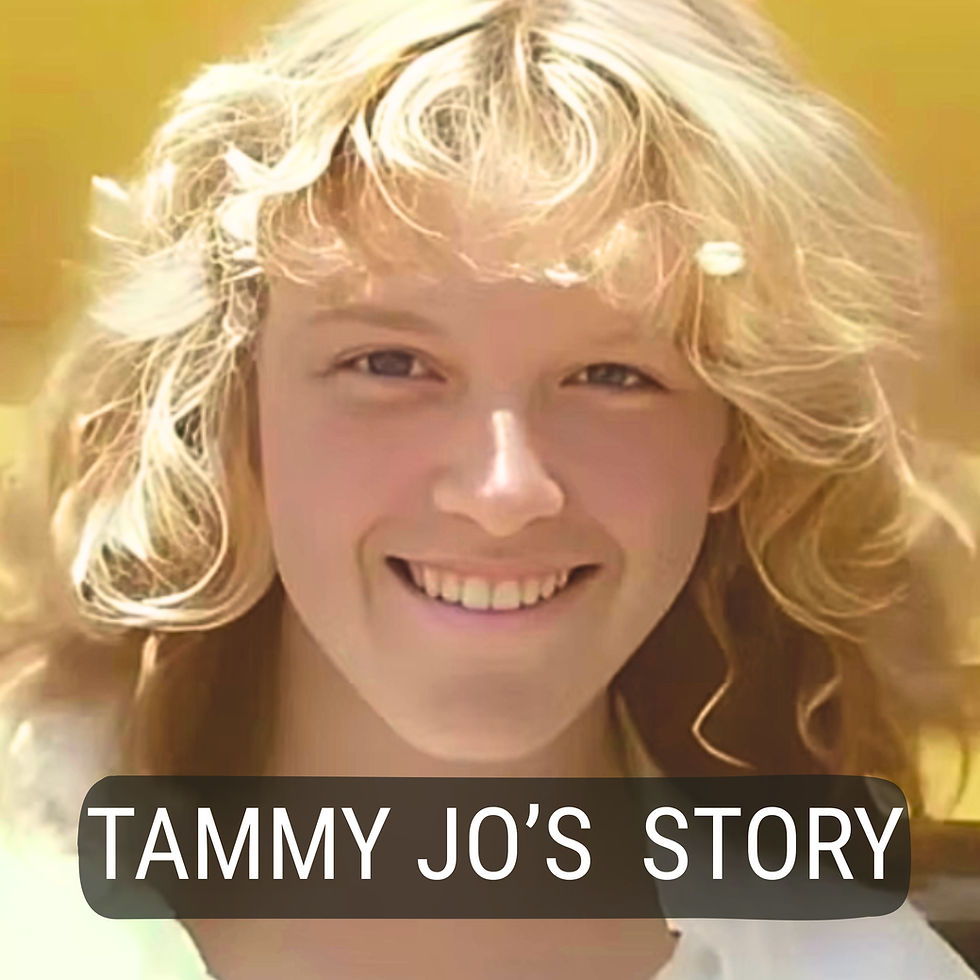
Shari isn't alone. Tammy Jo Alexander was found shot near Caledonia in 1979, unidentified until 2015.
And there is the woman I care about most, who still has no name: Ellery Jane Doe, found near Ellery in December 1983. Three women, one narrow New York corridor, the same signature: a Florida orbit, a long road north, a body left near water and stripped of identity.
What first convinced me this wasn't coincidence, after I went through the newspaper archives myself, is Wilder's classified-ad business, dozens of phone numbers running constantly. Every so often the ads fall silent, and in those silences a woman dies. Then they resume.

Tammy Jo, and the “facts” that cleared the wrong man
Two claims were long used to clear Wilder of Tammy Jo. Neither holds. The first was the description: about five foot nine, glasses, curly hair. Wilder actually stood around six foot, yet his own records repeatedly logged him at five foot nine, so the figure doesn't exclude him; it matches how he was mis-measured. In his own words he wore hairpieces to disguise himself when he set out to commit sex crimes, so “curly-haired” one week meant nothing the next. He wore glasses too. The description fits him.
The second was the car, a side-panelled station wagon, taken as proof because Wilder drove sports cars.
But working the classifieds myself, I found he had access to exactly that: a wood-panelled,
high-performance station wagon, formerly his father Coley's, left behind when Coley returned to Australia. And Tammy Jo's ex-boyfriend last dropped her at a condominium in St Petersburg, later reasoning its owner was her killer. In 1979 and beyond, Wilder can be tied to St Petersburg and nearby Bradenton through real estate. The last place she was seen sits inside his territory.
The same gun, the same sun
All three were shot, consistent with the heavy revolver Wilder owned, a .357 Magnum, a weapon for maximum harm. All three also had tan lines on the legs, the mark of sustained sun. For Ellery Jane Doe, found tanned in a New York December, the body itself argues a warm-climate life somewhere like Florida or Australia, not the northeast. Her search shouldn't be confined to where she was found.

The note, and the woman with no name
Ellery Jane Doe was roughly 30 to 37, a mother, posed in running water, in fine European clothing, carrying nothing to identify her. Her intrauterine device wasn't sold in the United States, but was available in Australia, New Zealand and Europe, widening where she lived well beyond America.
In her coat was a crumpled note, three lines on Vancouver motel stationery, a riddle that had sat unsolved for forty years. It took me many, many hours to work out each aspect of it, line by line, until the numbers gave. They led to Wilder: one string matched the tail of his passport number, another his Australian bail.
The third line had defeated everyone, long read as a word, “Sarg.” It isn't a word. I found it reads 5 Aug, a date, with a court file reference. And it isn't the five-digit “74261” people assumed; the mark before the
final digit is a dash joined to a 1, so it reads 7426/1, a properly formatted court file number for Wilder's committal. The 5th of August was that committal hearing.
Read from late January 1983, that line points forward, to a date months away. At that moment Wilder was not in North America; he was in Australia, unable to leave until his bail was varied on 28 January 1983, the very day the note seems to date from. Whoever wrote it was tracking his legal calendar at the moment it mattered. And that calendar has a clear starting point. Wilder flew into Australia on 6 December 1982, and everything in the note, from the passport to the bail to the committal, flows from that trip.
Ellery Jane Doe was found dead almost exactly a year later, on or near 6 December 1983. For someone to be holding these details, she was tied to Wilder across that whole span, which means she knew him for at least a full calendar year. She was not a stranger he met days before she died. She can be found in the year before it, among the people inside his money, his cases and his movements.
Two more threads agree. Nicole, a now-retired model, was approached in New York that
December by a man with a portfolio, she later identified as Wilder, and she kept a receipt placing him in the city forty-eight hours before EJD was found three hundred miles west. And her clothing traces, I believe, to a high-fashion New York night she had no business being near.
The one line that may be hiding her
Now the part I most need you to hear. Online, you'll find a line repeated across the missing-persons databases: that, according to an anthropologist, she had at least one child about fifteen years before her death.
I've watched careful people use that one sentence to rule candidates out, reasoning she'd have given birth around 1968, so this can't be her. Ruby, this one is for you.
I checked it. The wording lives on an aggregator entry as an anthropologist's estimate, not on the official sheriff's page or in the case record. And the science doesn't support it. A post-mortem can sometimes show a woman bore a child, and whether a birth was recent, but it cannot count the years on a remote one.
The uterus returns to normal within about six weeks and then stops keeping time. Stretch marks fade to permanent white scars that look the same at two years or twenty. And the pelvic “scars of parturition” an anthropologist would use have been tested for decades and don't reliably show whether a woman gave birth at all, let alone when.
So “fifteen years prior” isn't a fact; it's an estimate the evidence can't carry.
The same caution applies to her height and age range, or any single measurement hardened into a rule.
Give them back their names
Shari Lynne Ball got her name back. Tammy Jo Alexander got hers. Ellery Jane Doe is still waiting. So I'll ask what I've had to ask myself: search wider. Don't rule a woman out on a height that doesn't match, even by sixteen centimetres, because there can be plausible reasons for it; or on a car that turns out to fit, or a child born in the “wrong” year. Weigh what truly identifies a person: DNA and genetic genealogy, dental work, medical clues, distinctive marks, the timeline.
I didn't take this on for a byline. It took me a great many hours, but I stand behind every line of it. Three women set out believing they were headed somewhere better. The least we can do is bring all three home with their names.
____________________________
10 REASONS IT WAS WILDER
The case against Christopher Wilder in the murder of Shari Lynne Ball
1. The Lure Shari vanished right after a man offered to make her a model in New York — the exact con Wilder ran on victim after victim.
2. His Home Turf She met him in Boca Raton, minutes from Wilder's Boynton Beach home — and his local hunting ground.
3. He Was in Country Wilder had just returned from Australia on bail, described by those who knew him as "a powder keg ready to explode."
4. His Favourite Route Shari ended up in western New York — the same 1,200-mile route Wilder travelled again and again.
5. The Timing Two days after Shari's last call, Wilder was in New York, using the same modelling pitch on two young mothers at a yard sale.
6. The Beauty Pageant A July 4th pageant ran in Buffalo that weekend — 34 miles from where Shari's body was dumped. Wilder loved a pageant.
7. The Area His ex-girlfriend Beth Kenyon lived nearby. Wilder bragged he'd visited her family's store that very morning.
8. His Type Twenty. Slim. Pretty. Tanned. Chasing a modelling career. Shari fit Wilder's victim profile to a T.
9. The Ad Trail Wilder ran an industrial blitz of newspaper classifieds — that fell silent every time he killed. Shari's murder fits one of those gaps exactly.
10. The Same MO She was left nude, stripped of all ID, off a remote road near water — every hallmark of a Wilder kill.
"Chad Bea was 99% certain it was Wilder. I'll go the extra 1%. It's Wilder." — Andy, Catching Evil
__________________________
Help Us to Keep Investigating
Contact us here if you know something about Christopher Wilder. If you had an encounter with him, are you are a friend or a family member of someone who never made it home, we want to hear your story:
Email: info@catchingevil.com
_________________________
Catching Evil is committed to making a meaningful impact in the lives of those affected by violent crime, particularly in light of the chilling legacy of serial killer Christopher Wilder, who left behind a still-growing number of victims. In our pledge to honour these individuals and support their families, we donate to not-for-profit groups in both America and Australia.

Survivors of Homicide Inc, based in Connecticut, provides assistance to anyone who has lost a loved one to violent crime.
All services are offered to members free of charge, including one-on-one counselling, support groups, court support throughout the judicial process and personal advocacy in working with law enforcement and other community agencies.
It was founded in 1983, just before Christopher Wilder went on his rampage, by a group of families trying to cope with the murder of a loved one that shattered their lives.

When you donate to Yesterday Today Tomorrow Women, you are investing in the empowerment of women across generations. This Florida based nonprofit was founded by Kris Conyers, who was abducted off the street at gunpoint by Christopher Wilder when she was 11 years old.
YTT Women is dedicated to advancing women’s mental health and social wellbeing and contributions directly support community-based initiatives that raise awareness, provide resources, and foster safe, supportive spaces for women to grow and heal.

Mary’s House Services was founded in 2015 by a dedicated group of concerned citizens from Sydney’s northern suburbs, close to where Christopher Wilder was born and lived wth his family. Members of the local clergy, health authorities, philanthropists and community and business leaders came together to help provide safety for women and their children, victim-survivors of violence and abuse.
The Mary’s House refuge was established to address the significant gap in government funded services and to save lives in the region by providing critical support and a safe space to cope with their trauma and begin to rebuild their lives.
How to donate: https://mhs-summer-appeal-2025.raiselysite.com/#donate


Comments