Episode 4: Beauty Was Her Death Sentence

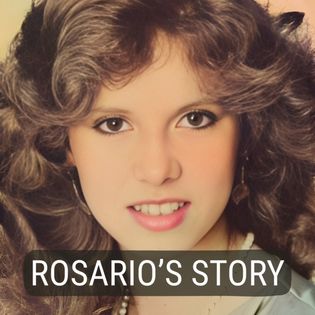
'The Only Thing I Have Is the Wedding Ring I Never Got to Put on Her Finger'
A Love Story Destroyed by a Serial Killer
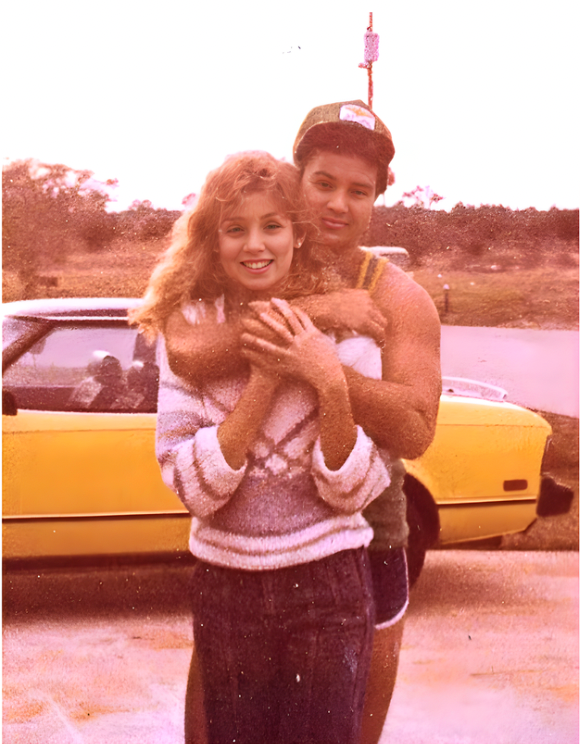
Heartbroken Bill Londos opens up about the day his soulmate vanished into thin air – and the monster who stole his future
Bill Londos has only one keepsake from the woman he was meant to marry: the wedding band he picked out with her. For 42 years, it's been all he has left of Rosario Gonzalez – the "most beautiful woman" he ever met, who disappeared minutes after a photograph captured her radiant smile for the final time.
"This was my whole future," Bill says, his voice breaking. "I don't think I'm ever going to find any way to replace her. There's just no way."
Their love story should have had a fairytale ending. Instead, it became a nightmare that shaped the rest of Bill's life – and it's just one of the devastating accounts revealed in this week's gripping episode of the hit true crime podcast Catching Evil.
The Girl Who Had Everything

Rosario – known as "Chary" to those who loved her – was living the dream at just 21. A stunning beauty queen and aspiring model, she also taught Sunday school and was planning her wedding to Bill, her college sweetheart, which was just a few months away.
"I saw her one day and instantly fell in love," Bill recalls. "I waited at that same spot for three weeks until she walked by again."
The daughter of Cuban immigrants who'd fled Castro's regime to build a new life in Florida, Rosario embodied hope and promise. Her father was a church deacon, her mother a respected accountant at Miami's CBS television station.
But on February 26, 1984, during Miami's second-ever Grand Prix – a celebration meant to mark the city's rebirth from its dark days as America's murder capital – Rosario vanished.
The Phone Call That Changed Everything
Bill was five hours away at college when his dorm phone rang that Sunday evening. He expected to hear Rosario's voice – she called him every night without fail.
Instead, it was her frantic parents.
"She was supposed to be home at five. It was seven o'clock," Bill remembers. "They were already frantic, and it was only two hours. I got in my car because I already knew something was wrong."
He drove through the night, arriving at dawn to find a family in crisis and a beautiful young woman who'd simply disappeared from a crowd of 250,000 people.
"Even back then, I knew she was dead," Bill says quietly.
The Last Photograph

The final image of Rosario is haunting in its ordinariness. A Miami firefighter, captivated by the pretty girl in red shorts and a white T-shirt handing out aspirin samples, asked if he could take her photograph. She smiled, sat down on some sandstone steps, and posed.
She looks remarkably like actress Samantha Eggar from The Collector – the film we know serial killer Christopher Wilder was obsessed with.
That resemblance may have sealed her fate. Her name was Rosario. Her family called her Chary. She mattered. She still matters. Listen to her story. Remember her name.
A 21-Year-Old Fighting for Answers
What followed after Rosario's disappearance was every family's worst nightmare. Bill, just 21 and suddenly thrust into the role of desperate advocate, learned to play the media game.
"I was on the news every day for months, even national news," he recalls. "I learned that game really quickly. I would call the news and tell them what was going on, and they would put it on the news."
He and Rosario's family started a reward fund. They convinced police to issue a missing persons report before the standard 24 hours had elapsed. They found witnesses.
"I depended on the police, which I think was a mistake," Bill admits. "But you don't learn those things till it's too late."
Veteran reporter David Goldstein, then a rookie at CBS Channel Four where Rosario's mother worked, covered the case from day one. He remembers the shock that rippled through Miami.
"Here's this guy who somehow sweet-talks Rosario into coming with him, promising her some kind of modelling career, with the roar of these engines and the roar of the crowd," Goldstein says. "That's just something you can't fathom."

The Monster in Plain Sight
Christopher Wilder was at that Grand Prix. The wealthy Australian-born businessman and race car driver had competed in a junior race the day before, finishing 17th. He lived just 40 minutes from Rosario's home.
Tall, handsome, seemingly respectable – he was the ultimate predator hiding in plain sight.
And Rosario wasn't his first victim. She wouldn't be his last.
A Life Shaped by Loss
Bill became a successful Miami construction businessman and father of four, from four failed marriages. The ghost of what should have been still haunts him.
"Deep down inside, I know it's shaped my personality over the years," he says. "But you're a guy and you're supposed to be tough and you're supposed to get over things. The biggest thing with me is there's no closure. There's no way for me to go visit her."
The wedding date he can never forget: June 4th.
His interview with Andy Byrne is one of the most emotional in the entire Catching Evil series – a podcast that has spent eight years honouring the forgotten victims of one of America's most prolific serial killers, born in Australian to a US war hero and a Sydney tram conductor's daughter.
"These victims have largely been forgotten because, sadly, there were so many of them," says co-host Mark Llewellyn. "But Bill is one of the reasons we did this series. It was very important for us that we honour the victims and the people who loved them."
Episode Four of Catching Evil – "Beauty Was Her Death Sentence" – is available from Tuesday.
"I Was Hypnotised Knowing I Was In Trouble": The 16-Year-Old Who Obeyed a Serial Killer's Every Command
Smart girl. Good parents. All the right warnings. But Christopher Wilder had spent years perfecting his craft—and she never stood a chance.

At just 16 Fiona was a spirited tomboy living a carefree life on Sydney's northern beaches when she encountered serial killer Christopher Wilder as she walked to her Saturday job near Sydney's Manly Beach.
With her beachy light brown hair and blue dress, she embodied confidence and respect, traits instilled by her parents.
Within minutes, she had fallen completely under the control of the ruthless yet charming predator.
That fateful morning in December 1982, Fiona was approached by Wilder, who presented himself as a talent scout for a modelling agency. His polished appearance and American accent seemed exciting, making her momentarily forget the warnings about strangers that her parents had taught her.
Enticed by his offer of $100 to join him for a photo shoot, she saw it as an exciting opportunity rather than a dangerous trap.
“It was like you're hypnotised knowing you're in trouble, but you just did everything he said.
“My father dropped me off to go to work … in a little fashion shop, and as I was waving goodbye, Wilder walked up to me," said Fiona.
"Hhe had a beard, dark hair, a bit balding, and he showed me a business card and it had photographer on it.”
Fiona told Wilder she was doing a June Daly Watkins modelling and deportment course.
Wilder told her his office was right above June Daly Watkins ' office.
“So I was just sucked in instantly, “ she says.
“Can I take a couple of photos of you?” Wilder said.
“I want you to come and work with me. I want you to be the receptionist. I'll give you a hundred dollars now. Come with me now,” the charming photographer continued.
For Fiona, everything her parents told her about strangers went out the window.
“I did not listen. I followed him, we went to his car, he opened the back of the car and the car was full of camera gear.”
As they drove away, Wilder's questions shifted from casual to deeply personal, probing her about her family and her virginity, threatening her with a lie detector test if he suspected she wasn't telling the truth.
Alarm bells began to ring, but the psychological grip he had on her was tightening, leaving her feeling vulnerable and confused. The charming facade quickly morphed into a disturbing game of control, making her doubt her own instincts.
The situation escalated at a shopping Mall, where she found herself trying on swimsuits, sobbing quietly in a changing room without the courage to ask for help.
Wilder’s influence was all-consuming, and she felt compelled to obey his increasingly unsettling demands. When he instructed her to approach other girls at the beach, she complied, unwittingly assisting him in his predatory behaviour.
The turning point came when she witnessed another girl in a green bikini being manipulated into a compromising situation. As that girl returned in tears, the reality of Wilder's true nature struck her hard. Despite this realisation, she felt abandoned when he left her behind, consumed by a mix of fear and confusion.
“He suddenly vanished and then I started crying,” Fiona recalled.
“I just couldn't stop sobbing. I could not stop crying. I went back to where the car was and it was gone. I felt rejected. I can't explain why I had this feeling.
“The detective who interviewed me said I was one lucky girl. On a map in the interview room there was red dots all over this map. It was where girls had been raped. And that I was never going to be a red dot on that map.”
Reflecting on her experience, she later recognised elements of Stockholm syndrome, revealing the psychological manipulation she endured. Her story sheds light on the vulnerabilities that predators exploit, and the chilling reality of how easily one can become ensnared in such a dangerous web.
"Without a doubt, 100 per cent he killed those girls on Wanda Beach. Without a doubt, he is the Wanda Beach killer," Fiona says.
______________________________________________________________________
5 Takeaways from Episode 4


1. A Haunting Disappearance: The episode centers on the tragic case of Rosario “Chary” Gonzalez, a model who vanished without a trace during the 1984 Miami Grand Prix. Her beauty, once a blessing, became a curse as her disappearance cast a dark shadow over the event, leaving her family and fiancé, Bill Londos, in despair.
2. Bill's Heartbreak: Fiancé Bill Londos shares the profound impact of Rosario's disappearance on his life. Reflecting on their stolen future together, he expresses his anguish, stating, “This was my whole future.” His emotional turmoil highlights the deep scars left by her loss and the lack of closure he still feels.
3. Frantic Search Efforts: After receiving a frantic call from Rosario's parents, Bill drove five hours to help search for her, convinced something was very wrong. The episode details the desperate search efforts by Bill and her family, as they faced numerous challenges and the growing fear of the unknown.
4. The Connection to Christopher Wilder: Experts discuss the chilling link between Rosario and Christopher Wilder, the "Beauty Queen Killer." Bill reveals that Rosario had previously encountered Wilder during a photoshoot, where her refusal to go topless may have saved her life, underscoring the dangers posed by predatory individuals.
5. A Reminder of Hidden Dangers: The episode serves as a poignant exploration of love and loss, emphasizing the importance of remembering victims like Rosario. Bill’s heartfelt memories remind listeners that beauty can sometimes attract danger and that the shadows of evil are always lurking, waiting to strike.

Wilder sits in his race car, a sleek black Porsche 911 Turbo, number fifty-one, just before competing in the 1984 Miami Grand Prix.
His was only a side bill race to the weekend’s main event, but he didn’t care. He’d started in twenty-first place on the grid and battled up four places to finish with a small allocation of the prize money.
This was on the Saturday. The following day, Sunday, he returned to the track and abducted Rosario Gonzalez, who he had previously photographed in a shoot that had ended badly.
He'd spotted Rosario working, distributing free aspirins for a sponsor.
Her beauty was her death sentence. Her body has never been found.

Survivors of Homicide Inc, based in Connecticut, provides assistance to anyone who has lost a loved one to violent crime.
All services are offered to members free of charge, including one-on-one counselling, support groups, court support throughout the judicial process and personal advocacy in working with law enforcement and other community agencies.
It was founded in 1983, just before Christopher Wilder went on his rampage, by a group of families trying to cope with the murder of a loved one that shattered their lives.

When you donate to Yesterday Today Tomorrow Women, you are investing in the empowerment of women across generations. This Florida based nonprofit was founded by Kris Conyers, who was abducted off the street at gunpoint by Christopher Wilder when she was 11 years old.
YTT Women is dedicated to advancing women’s mental health and social wellbeing and contributions directly support community-based initiatives that raise awareness, provide resources, and foster safe, supportive spaces for women to grow and heal.

Mary’s House Services was founded in 2015 by a dedicated group of concerned citizens from Sydney’s northern suburbs, close to where Christopher Wilder was born and lived wth his family. Members of the local clergy, health authorities, philanthropists and community and business leaders came together to help provide safety for women and their children, victim-survivors of violence and abuse.
The Mary’s House refuge was established to address the significant gap in government funded services and to save lives in the region by providing critical support and a safe space to cope with their trauma and begin to rebuild their lives.
How to donate: https://mhs-summer-appeal-2025.raiselysite.com/#donate
Catching Evil, proudly a part of the Acast Creator Network, is an Original Voices presentation for Sticky Toffee Media


Comments